Master Australian Data Protection & Compliance in 2026
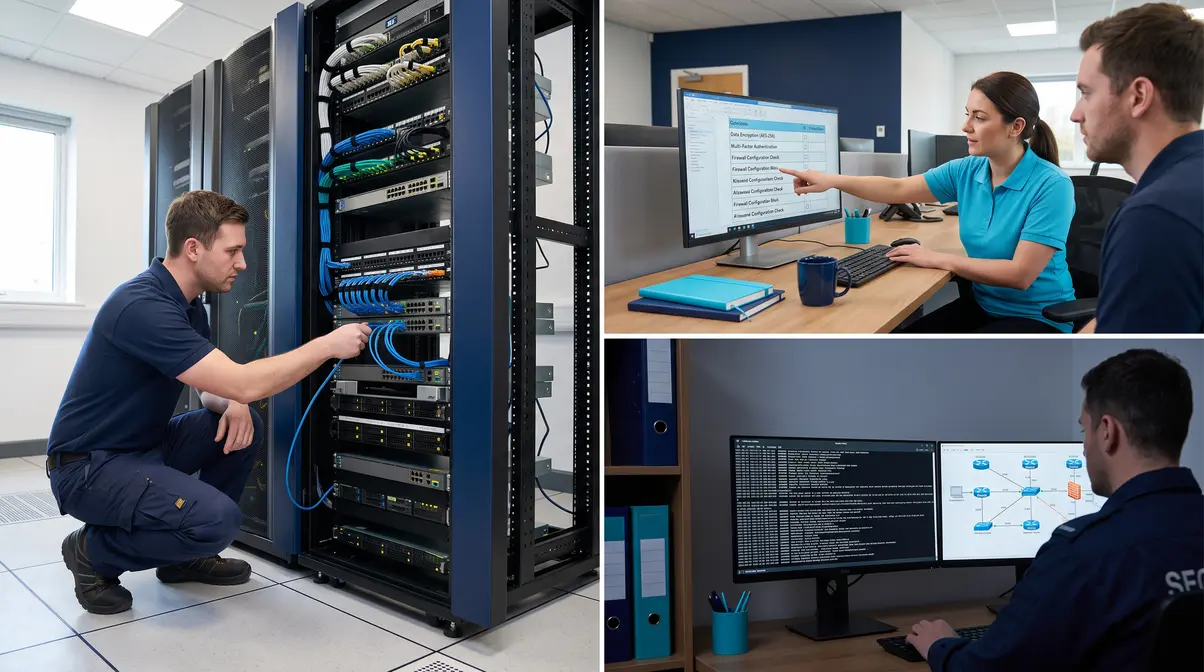
Struggling with Australian Data Protection laws? Our 2026 guide simplifies compliance, covering the Privacy Act and APP standards to keep your business safe.
Table of Contents
Understanding the 2026 Shift in Australian Data Protection
For small business managers in Perth and across the country, the digital landscape is undergoing a seismic shift. The framework governing Australian Data Protection is not static; it’s evolving to meet global standards and growing consumer expectations. As we look towards 2026, the era of “it won’t affect my small operation” is definitively over. The changes on the horizon, particularly the likely removal of the small business turnover exemption, mean that compliance is no longer optional—it’s a critical component of operational viability and risk mitigation.
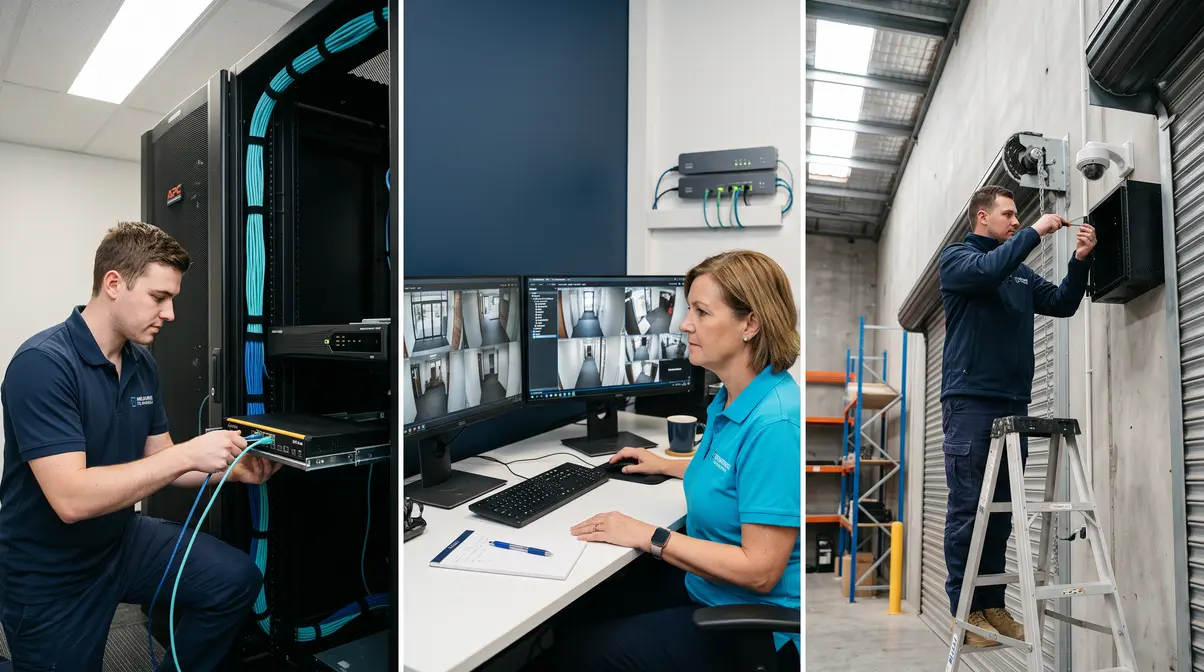
At Smart SYS, we have a unique vantage point. As a leading Integrated ICT & Security agency in Perth, our expertise isn’t confined to a single silo. We architect the networks that carry your data and the commercial security systems that protect your physical assets. This Dual-Engine model of ‘ICT Services’ and ‘Security Services’ makes us a Single Point of Accountability. We eliminate the frustrating blame game between IT contractors and security installers, providing a holistic, cohesive strategy. This article serves as your blueprint for mastering Australian Data Protection and ensuring your commercial operation is prepared for 2026.
The Bedrock of Compliance: The Privacy Act and the APPs
To prepare for the future, we must first master the present. The cornerstone of Australian Data Protection is the Privacy Act 1988. This key piece of federal legislation governs how personal information is handled. Its primary mechanism is a set of 13 Australian Privacy Principles (APPs), which set the standards for the collection, use, disclosure, storage, and disposal of personal data.
For a small business manager, understanding these principles is the first step toward compliance. While all 13 are important, several are particularly crucial for daily operations:
- APP 1: Open and Transparent Management of Personal Information. You must have a clear and up-to-date privacy policy that is easily accessible. It should detail what kind of information you collect and how you handle it.
- APP 3: Collection of Solicited Personal Information. You can only collect personal information if it is reasonably necessary for one or more of your functions or activities. You must also collect it by lawful and fair means.
- APP 5: Notification of the Collection of Personal Information. When you collect data, you must inform the individual. This is why you see CCTV signage and privacy notices on web forms.
- APP 6: Use or Disclosure of Personal Information. Once you’ve collected information for a primary purpose, you cannot use or disclose it for a secondary purpose unless you get consent or an exception applies.
- APP 11: Security of Personal Information. This is where our expertise in ICT and Security converges. You must take reasonable steps to protect the personal information you hold from misuse, interference, loss, and from unauthorised access, modification, or disclosure. This isn’t just about digital firewalls; it’s also about physical security.
These principles form the foundation of responsible data handling. However, the definition of “reasonable steps” is expanding, and the consequences for non-compliance are about to become much more severe.
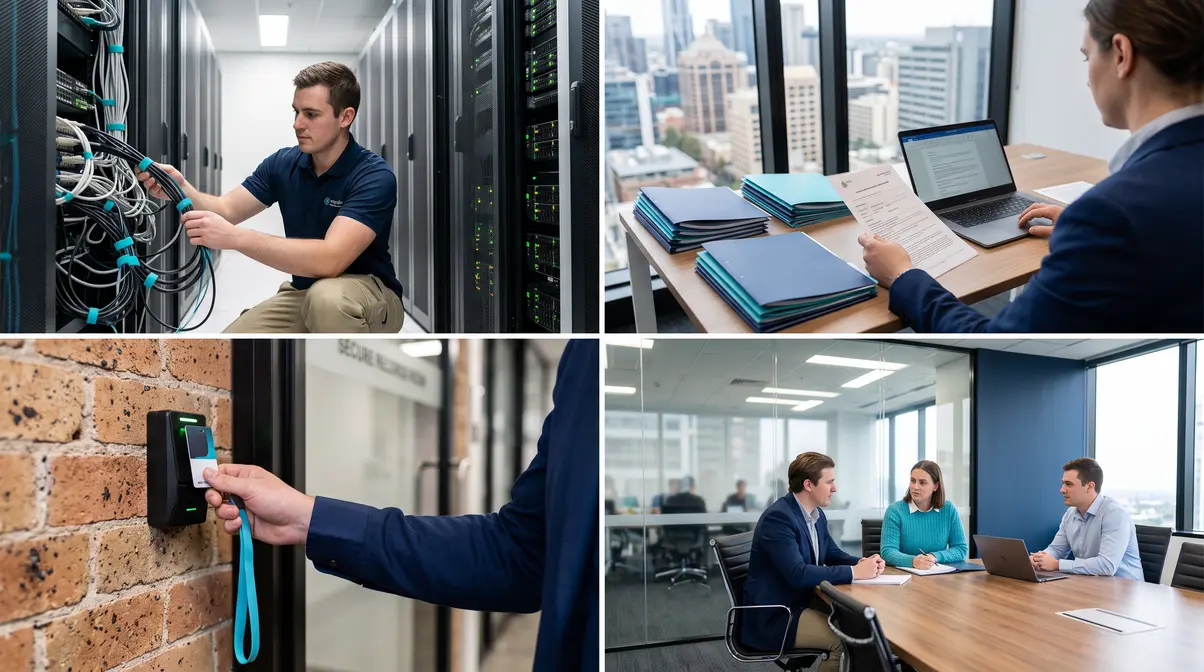

Navigating the 2026 Reforms to Australian Data Protection Laws
The Australian government’s comprehensive review of the Privacy Act signals the most significant changes in a generation. While the final legislation is pending, the direction is clear: a stronger, stricter, and more expansive privacy regime is coming. For small business managers, preparing for these changes now is essential for a smooth transition and avoiding costly penalties.
Key Anticipated Changes for 2026:
- Removal of the Small Business Exemption: This is the single biggest change for many. Currently, businesses with an annual turnover of $3 million or less are largely exempt from the Privacy Act. The proposal is to remove this exemption entirely. This means thousands of small commercial operations will need to become fully compliant with the APPs for the first time.
- Expanded Definition of “Personal Information”: Technical data, such as IP addresses, device identifiers, and location data, may be explicitly classified as personal information. This broadens the scope of data you are responsible for protecting.
- A “Fair and Reasonable” Standard: A new overarching requirement will likely be introduced, mandating that any collection, use, or disclosure of personal information must be “fair and reasonable” in the circumstances. This moves beyond simple compliance to a more ethical consideration of data handling.
- Enhanced Individual Rights: We anticipate Australia will adopt rights similar to Europe’s GDPR, including the “right to erasure” (allowing individuals to request the deletion of their personal data) and rights related to automated decision-making.
- Stricter Breach Reporting Timelines: The window for reporting a Notifiable Data Breach (NDB) to the Office of the Australian Information Commissioner (OAIC) and affected individuals may be shortened, demanding a more rapid and well-rehearsed incident response plan.
These reforms are designed to build public trust and modernise our laws to reflect a world where data is a primary asset. For small business managers, this shift requires a proactive, not reactive, approach to Australian Data Protection.
The Smart SYS Dual-Engine Approach to Australian Data Protection
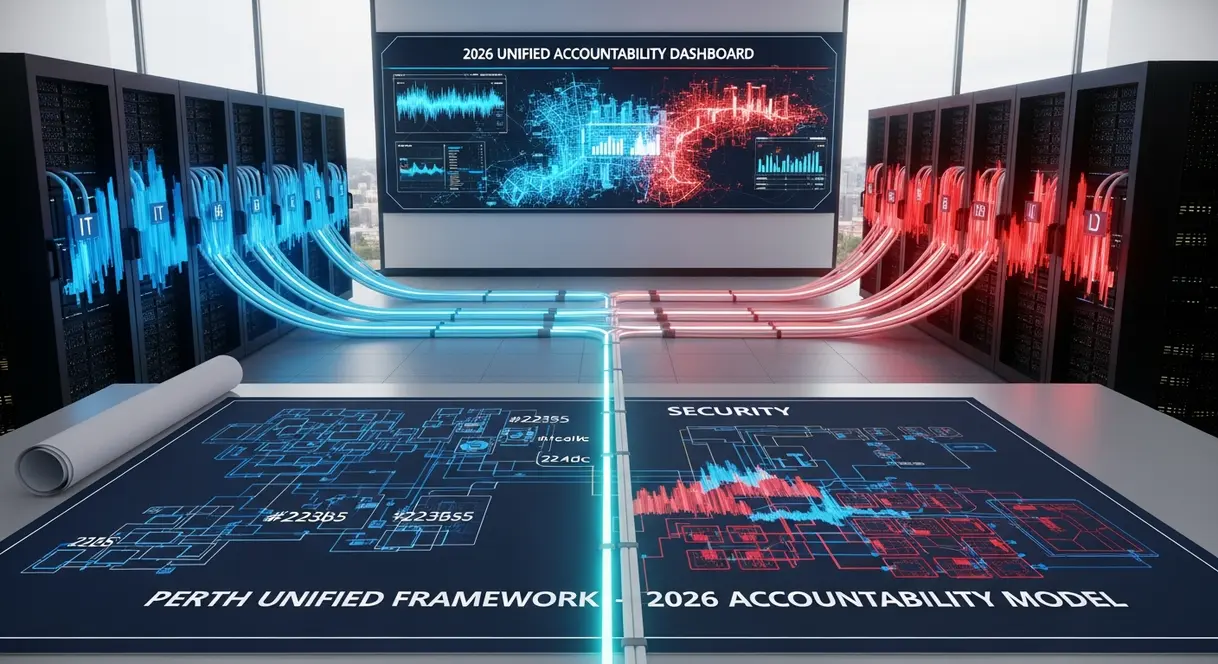
Compliance is not just an IT problem or a physical security problem—it’s an operational one. This is where our ‘Single Point of Accountability’ model provides immense value. We bridge the gap between your ICT infrastructure and your physical security systems, ensuring they work in concert to achieve compliance.
Part 1: The ICT Services Foundation
Your network is the circulatory system of your business data. A poorly designed or unsecured network undermines every other compliance effort. Our ICT services—encompassing Telecommunication, VoIP, unified group communication, and robust network infrastructure—are architected with security as a primary consideration.
A compliant network begins with its physical components. We insist on using high-quality, certified Cat5E or Cat6 Ethernet cable for all our installations. We’ve seen firsthand how cheap, non-certified cable and poor quality connectors can lead to data packet loss, intermittent connectivity, and security vulnerabilities that can cripple a commercial operation. A secure network infrastructure is the first line of your digital Defence, assuring that data moving across your premises is protected from unauthorised interception.
Part 2: The Security Services Layer
Modern commercial security systems are sophisticated network devices that collect vast amounts of personal information. Handling this data correctly is a core element of Australian Data Protection.
- Commercial CCTV Systems: These systems are no longer just passive recorders. They are data collection tools. The footage they capture—images of identifiable individuals—is personal information under the Privacy Act. Our approach ensures compliance by design. We install high-quality CCTV systems that provide clear, evidentiary-grade footage that supports accurate incident verification and liability protection. Crucially, we also advise on the necessary supporting policies, such as visible signage (fulfilling APP 5), access control logs for who can view footage, and data retention schedules to ensure data isn’t kept longer than necessary.
- Commercial Access Control: Every time an employee uses a keycard or a fob, a digital record is created. This data reveals patterns of life and is considered personal information. These systems must be secured against unauthorised access. The sensitivity of this data is magnified exponentially when dealing with biometrics. As this technology becomes more common, understanding the heightened compliance obligations is paramount. The collection of a fingerprint or facial scan is a serious privacy consideration, a topic we detail in our Biometric Access Control Perth: 2026 Privacy Law Guide.
- Alarms (Intrusion, Fire, Duress): It’s important to distinguish these critical life safety and asset protection systems. While they are a vital part of your overall security posture, alarm systems themselves are not typically considered network devices in the same way as CCTV and access control are. They protect your physical space, which in turn helps protect the servers and hardware that store your data, contributing to your obligations under APP 11.
By integrating both ICT and Security, we assure a seamless and compliant ecosystem, with no gaps for risk to creep in.
A Practical Action Plan for Australian Data Protection
Getting started can feel overwhelming. Here is a practical, step-by-step plan that small business managers can implement to get on the front foot with Australian Data Protection.
- Conduct a Data Audit: You can’t protect what you don’t know you have. Map out every touchpoint where you collect personal information. What do you collect? Why do you collect it? Where is it stored? Who has access? This includes customer lists, employee files, CCTV footage, and website contact forms.
- Review and Update Your Privacy Policy: Your privacy policy is a public declaration of your commitment to Australian Data Protection. It must be a living document, not a set-and-forget template. It should be easy to understand and accurately reflect your current data handling practices. The OAIC provides excellent resources for creating a policy that meets the requirements of the APPs.
- Secure Your Data (Digitally and Physically): This is a two-pronged approach. Digitally, it means robust firewalls, endpoint protection on all devices, strong password policies, and multi-factor authentication. Physically, it means securing server closets, restricting access to sensitive areas, and ensuring your security systems are functioning correctly.
- Develop and Test an Incident Response Plan: Under the Notifiable Data Breaches (NDB) scheme, a data breach is not a matter of ‘if’ but ‘when’. Having a clear, tested plan is essential for meeting your reporting obligations and mitigating damage. A critical part of this is a resilient data backup and recovery strategy. Your response to a breach is only as good as your ability to restore your systems. This is why our Perth Disaster Recovery & Backup: The 2026 Blueprint is an essential read for any forward-thinking manager.
- Train Your Staff: Your team is your first and most important line of defence. Regular training on your privacy policy, data handling procedures, and how to spot phishing scams or social engineering attempts is one of the most effective risk mitigation strategies you can deploy.
Why Professional Installation is a Non-Negotiable for Compliance
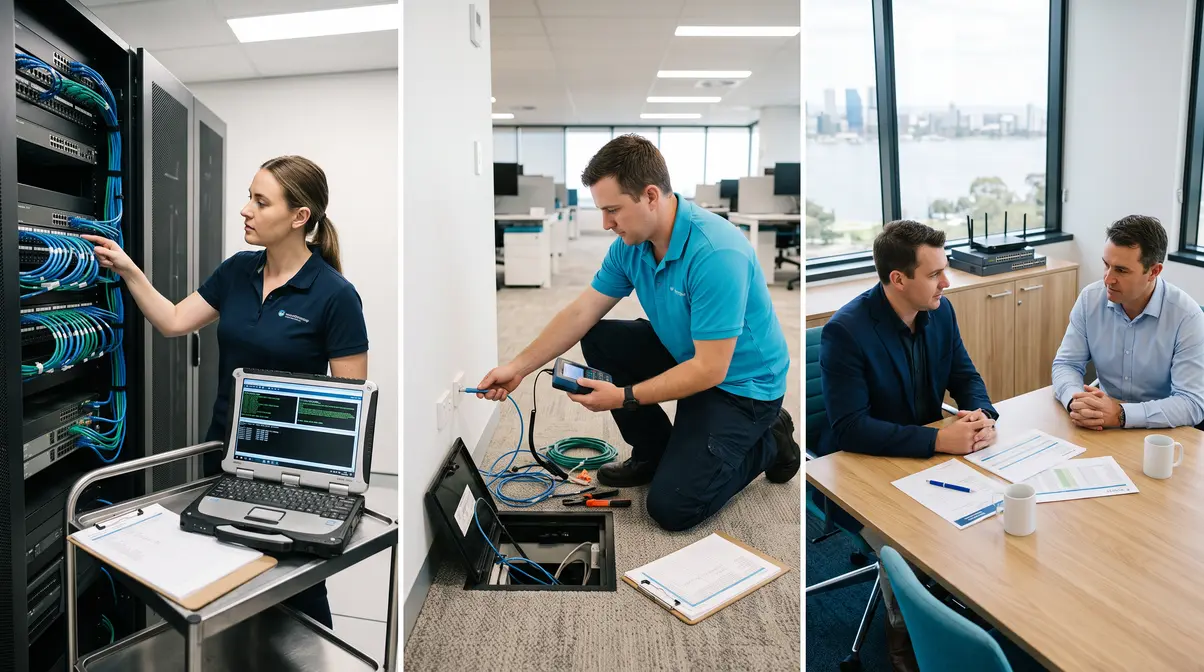
In the context of Australian Data Protection, a ‘DIY’ or ‘cheap-as-possible’ approach to your network and security infrastructure is a significant liability. The physical installation is as important as the technology itself. Our professional technicians understand that installation complexity varies greatly. An installation requiring exposed conduit on an external brick wall is vastly different from one requiring concealed cabling in delicate internal wall cavities. Our teams have the expertise to perform these installations while taking every precaution to avoid damages to the building.
Furthermore, when we are tasked with leveraging existing infrastructure, we conduct a thorough assessment. Simply plugging new, high-demand devices into an old, unverified network is a recipe for failure. This assessment prevents performance bottlenecks and hidden security flaws. It ensures that the network foundation can truly support the demands of modern data traffic from CCTV and access control systems. This integrated approach, where the ICT and Security experts work as one team, is fundamental to building a truly secure and compliant environment. It is the practical application of our ‘Single Point of Accountability’ promise.
It’s also important to note that professional, commercial-grade systems, while requiring an initial investment, typically have no or minimal ongoing monthly fees, providing a more predictable and lower total cost of ownership compared to many subscription-based consumer models, all while delivering superior ACCC compliance and performance.
Partnering with Smart SYS for Future-Proof Compliance
The journey towards mastering Australian Data Protection in 2026 is one of proactive preparation, not last-minute panic. The law is changing, the risks are growing, and the convergence of digital and physical security is now a reality for every commercial operation, regardless of size.
Relying on separate contractors for ICT and security creates gaps—gaps in responsibility, communication, and, ultimately, your security posture. As a ‘Single Point of Accountability’, Smart SYS eliminates these gaps. We architect, install, and maintain both sides of the compliance coin. We assure your network is robust and your security systems are compliant, creating a unified strategy for risk mitigation.
For small business managers in Perth, the time to act is now. Let us help you navigate the complexities of Australian Data Protection. Contact Smart SYS today to schedule a comprehensive assessment of your current infrastructure and build a resilient, compliant, and future-proof operation for 2026 and beyond.
Frequently Asked Questions
My business turnover is under $3 million. How will the 2026 data protection laws affect me?
The most significant anticipated change is the removal of the small business exemption. This means if your business has an annual turnover of less than $3 million, you will likely need to comply fully with the Privacy Act and the Australian Privacy Principles (APPs) for the first time. This includes how you handle all personal information, from customer lists and employee files to CCTV footage.
What’s the most important first step I can take to get my business ready?
The best place to start is by conducting a comprehensive data audit. You need to map out every type of personal information your business collects (e.g., customer details, CCTV video, web form submissions), understand why you collect it, where it’s stored, and who has access. You can’t protect data if you don’t know what you have.
Does my commercial CCTV system fall under these data protection rules?
Yes, absolutely. Footage from your CCTV system that captures images of identifiable individuals is considered ‘personal information’ under the Privacy Act. This means you have clear obligations, such as using signage to notify people they are being recorded (APP 5), taking reasonable steps to secure the footage from unauthorised access (APP 11), and having a policy for how long you retain the data.
What does a ‘Single Point of Accountability’ for IT and security actually mean?
It means having one expert partner manage both your digital infrastructure (ICT services like networks and comms) and your physical security systems (like CCTV and access control). This integrated approach eliminates the common problem of different contractors blaming each other when issues arise. It ensures your digital and physical security work together seamlessly to create a cohesive and compliant strategy for protecting your business and its data.
Turn Compliance Challenges into a Competitive Advantage.
Future-proofing your business against data breaches and regulatory fines isn’t just about policies; it’s about robust ICT infrastructure. Our experts can help you build and manage the secure, compliant network your business needs to thrive beyond 2026.

Post Comment