Biometric Access Control Perth: 2026 Privacy Law Guide
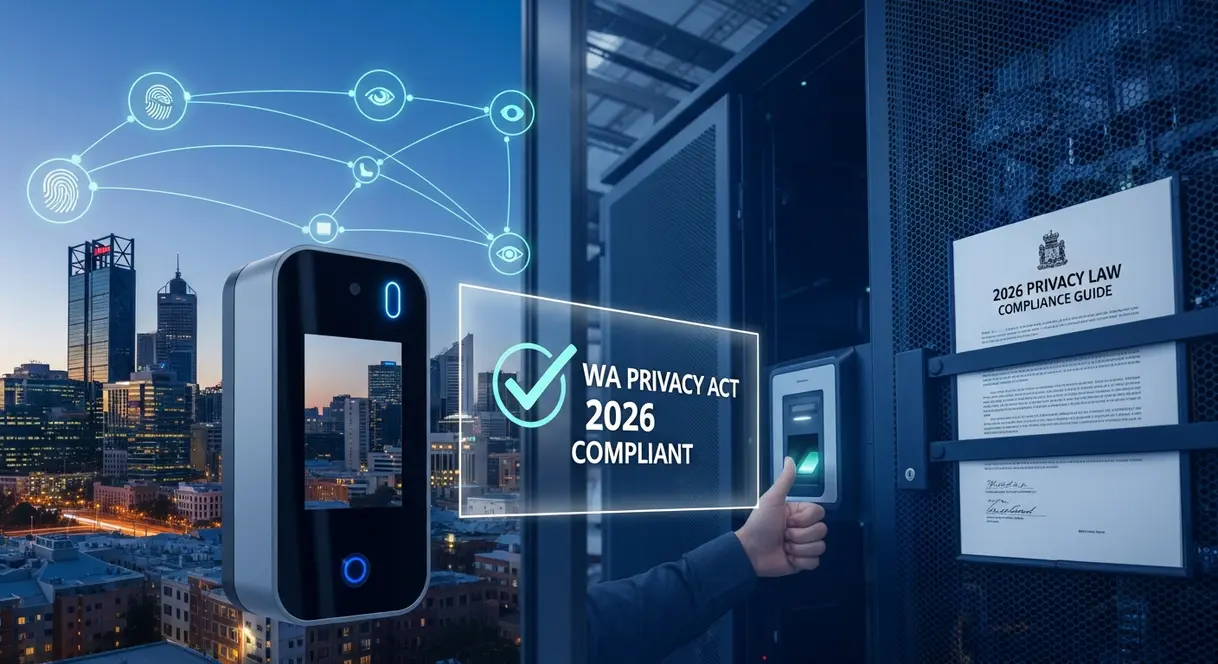
Ready for 2026? This guide to Biometric Access Control in Perth helps you navigate WA’s privacy laws and choose compliant brands for your business.
Table of Contents
The Future is Here: Navigating Biometric Access Control in Perth
For business managers across Perth, the conversation around commercial security is evolving at a rapid pace. Traditional keys are being replaced by fingerprints, and swipe cards are giving way to facial recognition. This technology, known as biometric access control, offers an unprecedented level of security and operational efficiency. However, this power comes with significant responsibility. As we look toward major reforms to Australia’s Privacy Act expected around 2026, understanding your legal obligations isn’t just good practice—it’s a critical component of risk mitigation. Here at Smart SYS, we architect the systems that keep your commercial premises secure while ensuring you remain on the right side of the law.
The landscape for Biometric Access Control Perth is complex, sitting at the very intersection of our dual-engine model: robust Security Services and sophisticated ICT Services. It’s a field where a misstep in one area can create a catastrophic failure in the other, leaving your organisation exposed. This guide is designed for you, the business manager, to demystify the technology and prepare you for the privacy landscape of 2026 and beyond.
What Exactly Is Biometric Access Control?
At its core, biometric access control is a method of verifying a person’s identity using their unique biological characteristics. Instead of something you have (a key or card) or something you know (a password), it uses something you are. This can include:
- Fingerprints: The most common and cost-effective biometric method.
- Facial Recognition: A rapidly advancing technology that maps the unique geometry of a person’s face.
- Iris or Retinal Scans: Highly accurate methods that analyse the patterns in a person’s eye.
- Voice Recognition: Identifies individuals based on their unique vocal patterns.
For a Perth commercial property, the benefits are clear. You can’t lose, forget, or have your fingerprint stolen in the same way as a key card. It provides a precise, time-stamped audit trail of who accessed which areas and when, which is invaluable for incident investigation. This technology moves beyond simple security and enhances operational accountability. However, the data it collects—your employees’ unique biological identifiers—is classified as ‘sensitive information’ under Australian law, requiring the highest level of protection and a clear, justifiable purpose for its collection.

The Privacy Act and the Approaching 2026 Legal Shift
Currently, the collection and handling of biometric data in Australia are governed by the Privacy Act 1988. This legislation sets out the Australian Privacy Principles (APPs), which place strict obligations on any organisation handling personal and sensitive information. The core tenets you must understand when considering Biometric Access Control Perth are:
- Necessity of Collection (APP 3): You can only collect biometric data if it is reasonably necessary for one or more of your business’s functions or activities. You cannot collect it just because it seems like a good idea.
- Informed Consent (APP 3): You must obtain explicit, informed consent from an individual before collecting their biometric data. This means clearly explaining what data you are collecting, why you are collecting it, how it will be stored, who will have access to it, and how it will be destroyed when no longer needed. A line in an employment contract is often not sufficient.
- Data Security (APP 11): Once collected, you must take active and reasonable steps to protect the information from misuse, interference, loss, and from unauthorised access, modification, or disclosure.
The Australian government is in the process of implementing sweeping reforms to the Privacy Act, with many changes expected to be legislated by 2026. These reforms are poised to introduce significantly higher penalties for breaches, a clearer and stronger definition of ‘consent’, and greater powers for regulatory bodies. The era of treating privacy as a tick-box exercise is over. Proactive compliance is the only viable strategy for long-term defense and risk management. For a detailed breakdown of current obligations, the OAIC’s guide on assessing privacy risks is an essential resource for any manager.
Implementing Biometric Access Control Perth: The Smart SYS Dual-Engine Approach
A common failure point we see in the market is when a system is installed by a specialist who only understands one half of the equation. A security installer might fit a state-of-the-art fingerprint reader but connect it to an insecure network, creating a massive data vulnerability. Conversely, an IT provider might set up a secure network but not understand the physical security requirements of the hardware. This is where our ‘Single Point of Accountability’ becomes your greatest asset.
Our approach to designing a compliant and effective Biometric Access Control Perth system is built on our two core pillars:
1. The Security Services Engine:
This starts with a thorough risk assessment of your premises. We don’t just sell you a product; we architect a solution. We analyse your specific security needs, staff workflows, and physical environment to determine the most appropriate biometric technology. We consider factors like the need for high-throughput areas, environmental conditions (e.g., a dusty workshop vs. a clean office), and the specific assets you need to protect. This ensures the security hardware itself is fit for purpose, from the biometric reader to the electronic lock.
2. The ICT Services Engine:
This is the critical part that is so often overlooked. Unlike a simple alarm system, a biometric access controller is a network device. It communicates and shares data across your network infrastructure. Our ICT expertise is non-negotiable for a secure implementation. We focus on:
- Network Infrastructure: The system’s reliability depends entirely on the network it runs on. Our services in telecommunication, unified group communication, and network infrastructure design ensure your biometric system has a stable and secure foundation.
- Secure Cabling: We exclusively use certified Cat5E or Cat6 Ethernet cable and high-quality connectors for all network-enabled security devices. We constantly encounter systems failing due to cheap, non-certified cable that cannot handle the data throughput or degrades over time, creating intermittent faults that are a nightmare to diagnose.
- Data Storage and Encryption: The biometric data (the ‘template,’ not the actual image) must be stored securely. We architect solutions where this data is encrypted both in transit (from the reader to the server) and at rest (on the server or in the cloud). We design the system to meet and exceed the requirements of APP 11.
By managing both the physical security and the underlying ICT network, we eliminate the blame game. When you partner with Smart SYS, there is a single point of accountability. This unified approach is the foundation of the modern security framework we advocate for, which is central to what we call the 2026 accountability model for Perth businesses.
A Practical Checklist for Implementing Biometric Access Control
Before you invest in a system, you need to do your due diligence. As a business manager, use this checklist to guide your decision-making process and to question potential providers of Biometric Access Control Perth solutions.
- Conduct a Privacy Impact Assessment (PIA): Before anything else, ask: Is this system genuinely necessary for our operations? Is it a proportionate response to the risks we face? Documenting this process is the first step in demonstrating compliance.
- Develop a Clear Written Policy: Create a formal policy that outlines exactly what biometric data will be collected, the specific purpose for its collection, how it will be securely stored, who has access, and the process for its secure destruction when an employee leaves. This policy should be given to every individual before their data is collected.
- Plan for Genuine Consent: How will you obtain and record explicit, informed consent? It must be freely given, not coerced. We strongly advise consulting with a legal professional to ensure your consent process is robust and fair, especially in an employment context.
- Question Data Security Measures: Ask your provider tough questions. Where is the server that stores the data physically located? Is it in Australia? Is the data encrypted at rest and in transit? What are the access control protocols for the back-end system?
- Assess the Provider’s Expertise: Does the provider speak fluently about both the security hardware and the ICT networking requirements? Can they demonstrate a deep understanding of the Privacy Act 1988 and the upcoming reforms? If they can’t answer questions on both, they are not the right partner.
The Hidden Costs of “Cheap” Biometric Systems
We understand the pressure on business managers to control costs. However, opting for a cheap, off-the-shelf biometric system can have devastating financial and reputational consequences. The true cost of a system is not the price on the quote. As we have previously warned when discussing the dangers of cheap alarms and their associated privacy risks, the principles are the same for access control: a low upfront cost often hides significant long-term liabilities.
A non-compliant Biometric Access Control Perth system exposes you to:
- Massive Fines: The proposed 2026 privacy law reforms are expected to dramatically increase financial penalties for breaches, potentially reaching millions of dollars for serious infringements.
- Reputational Damage: A data breach involving your employees’ most sensitive information can destroy trust and irreparably damage your brand.
- System Failure: Cheap hardware and poor installation using non-certified cables lead to system downtime, user frustration, and ultimately, a failure to provide the security you paid for.
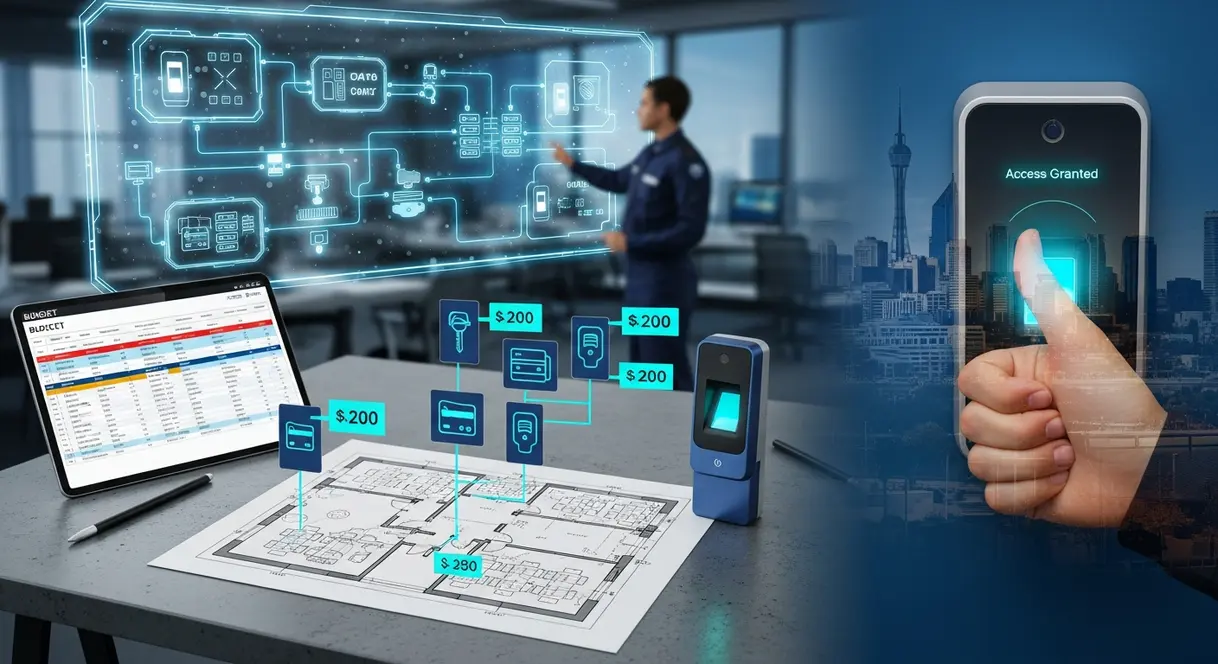
A professional installation from Smart SYS is about more than just technology. It’s about craftsmanship and respect for your property. Our technicians are experts at assessing existing infrastructure to leverage what’s already there, and they understand the complexities of installation, from running exposed conduit on external brickwork to carefully concealing cabling in delicate internal wall cavities to avoid damages to the building. When you invest with us, you are investing in a system designed for reliability and compliance. While we never provide fixed packages, a professionally designed and installed single-door Biometric Access Control Perth solution can start from a base price that represents a sound investment in risk mitigation. Crucially, our commercial-grade systems are designed to have no or minimal ongoing monthly fees, ensuring a predictable total cost of ownership.
Conclusion: Your Partner for Compliant Security in Perth
The journey into Biometric Access Control Perth is one of balancing cutting-edge security with profound legal and ethical responsibilities. The technology offers immense benefits for efficiency and asset protection, but the risks of a poorly implemented or non-compliant system are greater than ever, especially with the 2026 privacy reforms on the horizon.
Navigating this requires more than just a security installer or an IT company. It requires an integrated partner who understands how these two domains merge. At Smart SYS, our dual-engine approach provides that single point of accountability. We architect, install, and support Biometric Access Control Perth systems that are not only technologically robust but are also built on a foundation of privacy-by-design, helping to assure your ACCC compliance and mitigate your risk.
If you are a business manager in Perth considering the move to biometric security, we invite you to contact us. Let’s have a conversation about your unique needs and how we can architect a solution that secures your premises and protects your organisation for the future.
Frequently Asked Questions
Why is collecting a fingerprint for access so different from using a swipe card?
A swipe card is something an employee has, while biometric data like a fingerprint is part of who they are. Under Australian law, this makes it ‘sensitive information’ that requires the highest level of legal protection. A lost card can be cancelled and replaced; a breach of biometric data is permanent and poses a much greater privacy risk to your staff, making the legal responsibility on your business far more significant.
What are the key legal requirements for using biometric access control in my Perth business?
The three core requirements under the Privacy Act are: 1) Necessity of Collection: You must be able to prove the system is genuinely necessary for your business activities. 2) Informed Consent: You must obtain explicit, informed consent from each staff member before collecting their data. 3) Data Security: You must take active, reasonable steps to protect the collected data from misuse, loss, and unauthorised access, which includes secure networks and data encryption.
What’s the risk of buying a cheap biometric system online?
The risks are enormous and go beyond just the initial price. Cheap systems often have major security flaws, may not comply with Australian data storage laws, and can put you in breach of the Privacy Act, exposing you to massive fines. They also frequently use low-quality cabling and hardware that leads to system failures, leaving your business vulnerable and costing more in the long run to fix.
How do I get proper consent from my staff to use a biometric system?
Proper consent must be explicit and informed, not just a line in an employment contract. You must provide a clear written policy explaining what data you’re collecting, the specific purpose, how it’s securely stored, who can access it, and your process for deleting it when employment ends. Consent must be freely given, not coerced, and it’s wise to consult a legal professional to ensure your process is robust and fair.
Is Your Biometric Access Control 2026-Ready?
Upcoming privacy laws change everything for Perth businesses. Don’t risk costly non-compliance. Our experts design and install future-proof biometric systems that protect your assets while respecting new legal obligations. Secure your consultation today.

Post Comment