Migrating to Cloud Infrastructure: Perth SME Risk Guide (2026)
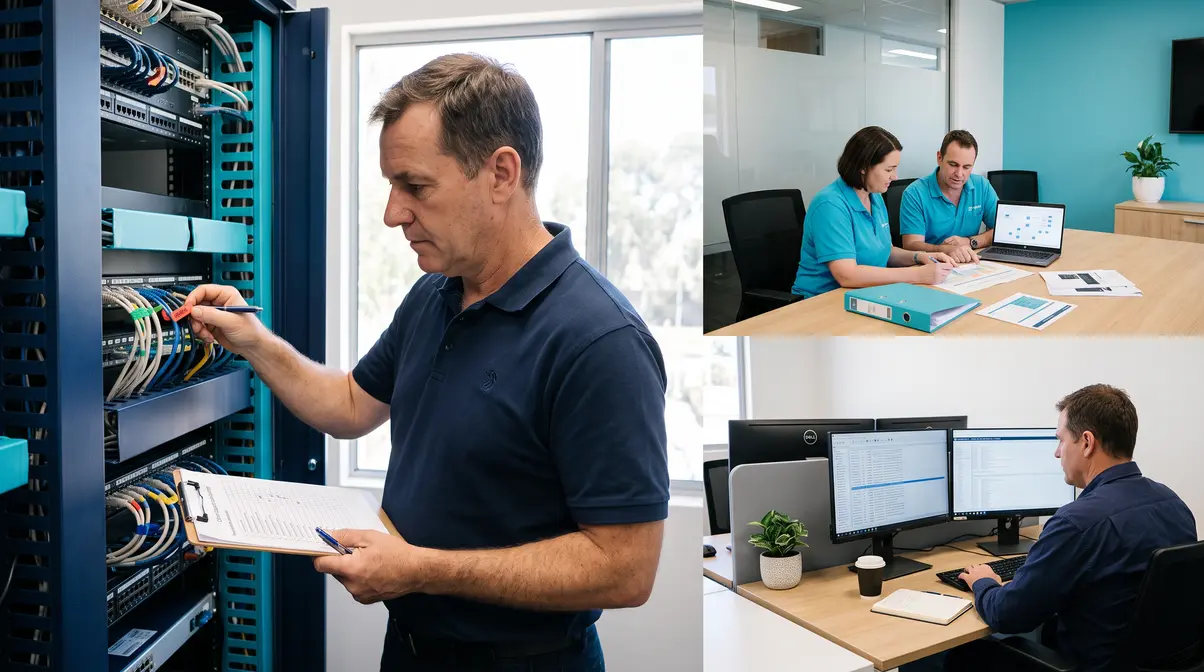
Migrating to cloud infrastructure safely is vital. Discover key risk mitigation strategies and expert advice designed for Perth SMEs in 2026.
Table of Contents
The Strategic Imperative: Migrating to Cloud Infrastructure for Perth SMEs in 2026
As commercial operations across Western Australia undergo continuous digital evolution, small business managers find themselves balancing digital agility with operational resilience. Moving enterprise applications, communications, and database architectures away from legacy on-premise hardware is no longer an experimental venture; it is a fundamental shift in how modern enterprises function. However, migrating to cloud infrastructure introduces significant structural dependencies that extend far beyond simply hosting servers in remote data centres.
At Smart SYS, we architect, deploy, and support both enterprise-grade ICT systems and robust physical security frameworks across Perth. In our experience as an integrated ICT and security specialist, cloud transitions succeed or fail based on the integrity of the physical and network environments that support them. When small business managers treat cloud adoption as an isolated software upgrade, they expose their organisations to bandwidth bottlenecks, integration failures, and perimeter vulnerabilities. Achieving a resilient migration demands a unified technical strategy—one that links physical security, robust local cabling, high-performance telecommunication, and enterprise cloud resources under a single architecture.
Assessing the Local Landscape: Why Migrating to Cloud Infrastructure Is Not Just an IT Decision
In the Perth commercial landscape, migrating to cloud infrastructure requires an understanding of the relationship between on-premise edge devices and hosted cloud platforms. A business cannot operate effectively in the cloud if its local network layer cannot sustain high-concurrency throughput, low-latency data streams, and uninterrupted uptime. When offsite cloud assets become the core repository for critical operational workloads, the local on-premise network becomes the single mission-critical bridge upon which the entire commercial enterprise depends.
Every digital transaction, VoIP call, unified group communication session, and video stream from an on-premise edge device relies entirely on the continuous health of your local infrastructure. Small business managers must recognise that cloud hosting does not eliminate local hardware dependencies; rather, it elevates the importance of the physical on-premise environment. If local routing, switching, or structural data links falter, access to offsite platforms ceases instantly, bringing core commercial operations to an abrupt halt.
Furthermore, cloud migrations directly intersect with local telecommunication, real-time collaboration platforms, and physical security management systems. By taking a holistic approach to ICT and security, we help commercial facilities avoid operational silos where IT contractors and security providers operate in isolation, leaving vulnerable gaps in network performance and commercial defence.
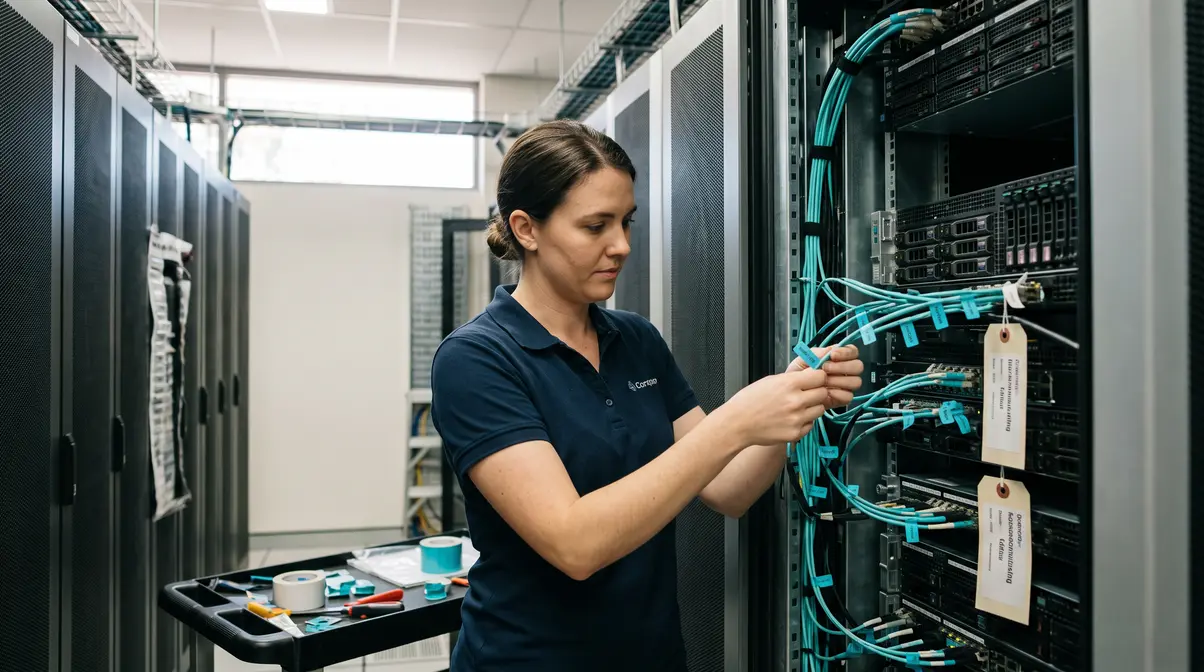

Network Readiness: On-Premise Cabling and Structural Foundation
A cloud-first operating model shifts the load from internal server backplanes directly onto local network distribution switches and commercial gateway routers. Before migrating to cloud infrastructure, assessing and upgrading the physical layer of your local network is an absolute operational requirement. Modern cloud platforms demand continuous, symmetrical data flow, which exposes any pre-existing flaw in structured cabling or legacy hardware.
High-performance networks rely on professionally certified Cat5E or Cat6 Ethernet cable runs terminated to stringent technical tolerances. A frequent vulnerability we encounter across commercial premises in Perth is the use of cheap, non-certified cable and poor quality connectors. Substandard copper cabling, non-compliant patch leads, and oxidised or poorly crimped RJ45 connectors introduce severe packet loss, intermittent attenuation, and cross-talk. While legacy local servers might have masked brief packet drops through local retries, cloud-hosted unified communications and hosted database sessions will degrade rapidly or disconnect under identical conditions.
Ensuring your local physical network can sustain cloud traffic requires comprehensive evaluation of the physical property. When planning structured data cabling, installation complexity varies significantly depending on building architecture:
- Challenging Building Fabrics: Running exposed conduit on external brick, structural concrete, or heritage masonry requires specialist routing techniques, industrial-grade fixings, and UV-stabilised enclosures to maintain aesthetic integrity and physical protection.
- Cavity & Ceiling Containment: Routing concealed cabling in wall cavities, drop ceilings, and commercial risers requires strict pathway separation from high-voltage electrical runs to prevent electromagnetic interference (EMI).
- Building Integrity: Our licensed technical specialists understand how to avoid damages to the building during complex retrofits, using non-destructive structural penetration practices, fire-rated penetrations, and neat containment pathways.
Before proceeding with cloud-hosted platforms, small business managers must have their Network Infrastructure professionally audited. Leveraging existing infrastructure requires careful assessment; legacy conduits and aging patch panels may lack the bandwidth capacity or structural headroom required for modern cloud synchronisation, PoE+ demands, and high-density endpoint traffic.
Critical Operational Risks When Migrating to Cloud Infrastructure
The journey toward hosted environments presents several distinct risk categories that small business managers must mitigate through strategic architectural planning. Without proactive oversight, unexpected vulnerabilities can compromise data integrity, network availability, and financial predictability.
1. Network Latency, Bandwidth Saturation, and WAN Failover
When daily operations depend on continuous cloud access, any degradation in your wide area network (WAN) directly impairs productivity. Concurrent real-time collaboration, hosted telecommunication, and cloud synchronisation can rapidly saturate unmanaged internet links. To mitigate this risk, commercial facilities require dynamic Quality of Service (QoS) prioritisation, software-defined WAN (SD-WAN) routing, and automated secondary failover links—such as enterprise 5G or diverse fixed-line paths—to maintain operational continuity if the primary carrier experiences an outage.
2. Unmitigated System Downtime
The financial consequences of unpredicted network disconnects during or after cloud transitions can be severe. Perth businesses in fast-paced sectors cannot afford blind spots in connectivity. Small business managers must evaluate the direct financial and reputational impacts detailed in our analysis of IT downtime costs to fully appreciate why redundant local and wide-area network design is non-negotiable when transitioning core workloads to remote data centres.
3. Security Misconfiguration and Access Controls
Transitioning on-premise data to remote multi-tenant environments requires robust identity governance. The Australian Cyber Security Centre provides guidance on risk mitigation and identity access governance through frameworks such as the Essential Eight maturity models. Cloud configurations must incorporate multi-factor authentication (MFA), role-based access control (RBAC), and continuous monitoring to protect operational integrity without exposing internal systems to unauthorized perimeter penetration.

Physical Security Convergence: CCTV, Access Control, and Alarm Systems
A critical oversight small business managers face when migrating to cloud infrastructure is failing to account for physical security integrations. Modern commercial facilities do not operate security in an analog vacuum; security assets interface directly with data pathways and identity directories. However, understanding the technical distinction between various security components is vital to maintaining network integrity.
Network Devices vs. Dedicated Life/Asset Protection Systems
Within a unified infrastructure, Commercial CCTV and Access Control systems function natively as network devices. They utilise local IP addresses, communicate across virtual local area networks (VLANs), require continuous PoE (Power over Ethernet) power budgets, and transfer high volumes of telemetry and video data over local Cat5E or Cat6 Ethernet cable runs to local or cloud-hosted management controllers.
In contrast, commercial alarm systems—including intruder detection alarms, duress alarms, and fire alarm systems—are dedicated life-safety and asset-protection systems. An alarm system is never classified merely as a network device. While modern alarms may connect to IP communicators or dual-path 4G/5G signalling modules for offsite monitoring transmission, they operate on strictly segregated, autonomous control logic to preserve operational readiness even in the event of a catastrophic local network or WAN failure.
| System Category | Device Classification | Cabling & Infrastructure | Cloud Integration Role |
|---|---|---|---|
| Commercial CCTV | Network Device | Cat5E or Cat6 Ethernet cable | Hybrid edge-recording with cloud metadata synchronisation and remote verification. |
| Commercial Access Control | Network Device | Structured Ethernet & Shielded Multicore | Centralised cloud identity provisioning, single-sign-on (SSO), and real-time credentialing. |
| Intruder & Duress Alarms | Dedicated Asset/Life Safety System (Non-Network Device) | Dedicated Security Multicore & Monitored Paths | Dual-path monitoring signalling; operates independently of local network availability. |
| Commercial Fire Alarms | Life Safety Critical Infrastructure (Non-Network Device) | AS1670 Compliant Fire-Rated Cabling | Direct monitoring agency connection; completely air-gapped from cloud dependencies. |
Evidentiary Video and Local Bandwidth Preservation
When migrating to cloud infrastructure, small business managers often assume that streaming continuous, uncompressed high-resolution surveillance video straight to the cloud is the standard methodology. However, streaming dozens of continuous camera feeds offsite creates severe upstream network congestion, which can destabilise critical business systems like hosted telecommunication and real-time collaboration platforms.
Our engineering approach deploys an intelligent hybrid architecture. High-quality CCTV systems provide clear, evidentiary-grade footage that supports accurate incident verification and liability protection by recording primary high-bitrate streams locally on isolated, network-attached storage or edge-based Solid State drives. The system then selectively transmits metadata, incident alerts, and low-bitrate proxy streams to the cloud. This architectural approach guarantees that your commercial facility preserves evidentiary clarity while conserving vital WAN bandwidth for core operations.
Unified ICT Architectures: Telecommunication, VoIP, and Real-Time Collaboration
Modern commercial operations require uninterrupted voice and real-time group collaboration to coordinate field personnel, administrative teams, and client interactions. One of the most significant advantages of migrating to cloud infrastructure is the deployment of scalable Telecommunication, enterprise-grade Voice over IP (VoIP), and unified group communication systems.
However, real-time voice and video traffic are exceptionally sensitive to jitter, packet loss, and latency fluctuations. While a user may not notice a two-second delay when downloading an email attachment from a cloud server, that same latency introduces severe voice clipping, dropped calls, and echo across VoIP and real-time collaboration platforms. Successful cloud voice integration requires precise Layer 2 and Layer 3 QoS configurations on your managed network infrastructure, ensuring voice packets receive absolute priority over background synchronisation and general web browsing.
When small business managers coordinate their telecommunication alongside unified group communication tools, managing these platforms under one cohesive architecture ensures team members communicate seamlessly without technical friction across mobile, desktop, and physical desk endpoints.

The Pitfalls of Multi-Vendor Fragmentation: Eliminating the Blame Game
One of the most persistent operational hurdles commercial enterprises face during digital transformations is multi-vendor fragmentation. When a technical fault arises, a fragmented contractor model often leads to finger-pointing:
- The IT contractor claims the network is offline because the physical access control controller is flooding the switch with broadcast packets.
- The security technician claims the access control system is failing because the IT provider misconfigured the local VLAN routing tables or blocked operational ports.
- The telecommunication provider claims voice drops are caused by poor cabling, while the cabling contractor insists their patch leads are fully functional.
This operational friction costs small business managers valuable time, elevates unpredicted engineering expenses, and leaves physical and digital perimeters vulnerable. At Smart SYS, our Dual-Engine Model (integrated ICT Services and Security Services) solves this issue directly. We provide a single, unified architecture covering Telecommunication, VoIP, unified group communication, real-time collaboration, structured network infrastructure, Commercial CCTV, Access Control, Fire Alarms, and Duress Alarms.
We act as your Single Point of Accountability. There is no blame game between IT and security contractors because our in-house specialists design, deploy, configure, and maintain the entire integrated environment. When a change, update, or troubleshooting request occurs, our team addresses the issue across all layers of your technical infrastructure.
A Step-by-Step Risk Mitigation Framework for Small Business Managers
Executing a successful transition without operational compromise requires a structured deployment methodology. When migrating to cloud infrastructure, our technical specialists execute a rigorous, phased mitigation framework:
Phase 1: Physical Infrastructure Audit and Cable Validation
We evaluate your property’s physical layer, inspecting cable runs, patch panels, power distribution units (PDUs), and comms racks. Any cheap, non-certified cable and poor quality connectors are identified and replaced with certified Cat5E or Cat6 Ethernet cable. We assess installation complexity, ensuring all containment pathways, external brick runs, and wall cavity penetrations preserve building integrity and avoid damages to the building fabric.
Phase 2: Network Segregation and QoS Engineering
We configure managed network switches, commercial firewalls, and enterprise routers with dedicated VLANs to separate general office data, VoIP telecommunication, real-time collaboration streams, and physical security devices (such as CCTV and Access Control). Stringent Quality of Service (QoS) rules are applied to ensure critical voice and real-time sessions maintain absolute priority across external internet gateways.
Phase 3: Security System Integration and Lifecycle Separation
We integrate network-based security assets (CCTV and Access Control) with cloud directory services and central identity stores, while ensuring dedicated asset-protection systems (Intruder Alarms, Fire Alarms, Duress Alarms) maintain independent, dual-path communicators and local processing autonomy.
Phase 4: Cloud Synchronisation and Carrier Redundancy
Operational data and enterprise applications are migrated systematically to cloud environments using encrypted pipelines. Automated cellular (4G/5G) or secondary fibre failovers are deployed and live-tested to ensure that if the primary internet service is disrupted, commercial operations continue without interruption.
Budgeting and Transparency: Commercial Systems with Predictable TCO
Small business managers frequently voice frustration regarding unpredictable IT recurring costs, unmonitored software seat licenses, and compounding cloud subscription models. When designing integrated ICT and security systems, cost predictability and transparent total cost of ownership (TCO) are central to our design philosophy.
We engineer robust on-premise physical infrastructure, commercial access control, and video surveillance systems that carry no or minimal ongoing monthly fees for base operational functionality. Rather than forcing clients into recurring proprietary licensing for essential local security hardware, we select commercial systems that deliver enterprise-grade performance, high reliability, and open standards.
Because physical building architecture, existing infrastructure condition, and containment complexity vary substantially from site to site, we do not present arbitrary fixed pricing packages. Instead, we establish clear investment baselines. Fully engineered commercial cabling and local infrastructure upgrades typically commence with project baselines Starting from $1,200 for entry-level physical site fit-outs, with final investment scaling cleanly according to endpoint density, cable run distances, building fabric complexity, and integrated hardware requirements.
While no technical specialist can claim 100% security against every emerging digital or physical hazard, we focus rigorously on risk mitigation, industry standard compliance, and total Australian Consumer Law (ACCC) adherence. We assure that our architectural designs minimise downtime risks, shield physical property, and deliver reliable commercial systems that stand the test of time.
Architecting Resilient Operations for the Future
Modernising your digital capabilities through migrating to cloud infrastructure is one of the most impactful operational decisions a Perth enterprise can make in 2026. However, cloud infrastructure is only as dependable as the local foundation connecting your premises to the outside world. By addressing physical cabling standards, bandwidth management, telecommunication quality, and the strategic convergence of commercial security devices, small business managers can build an agile, resilient enterprise.
Partnering with an integrated specialist eliminates the traditional operational divides between IT support teams and security contractors. At Smart SYS, our Dual-Engine approach ensures that your network infrastructure, unified communications, VoIP, Commercial CCTV, Access Control, and life-safety alarms operate in complete harmony under a Single Point of Accountability. Connect with our engineering team today to audit your existing infrastructure and build a secure pathway for your cloud migration journey.
Frequently Asked Questions
Why is on-premise structured cabling critical when migrating to the cloud?
Migrating to the cloud shifts your operational workloads offsite, making your local on-premise cabling the single mission-critical bridge between your staff and cloud-hosted applications. Certified Cat5E or Cat6 cabling prevents packet loss, jitter, and intermittent disconnections that degrade real-time cloud services, VoIP telecommunications, and hosted databases.
Can our business stream all commercial CCTV footage directly to the cloud?
Streaming continuous, uncompressed high-resolution CCTV feeds directly to offsite cloud storage often saturates local upload bandwidth, causing severe network congestion for other vital business applications. A hybrid architecture is best: storing primary high-bitrate evidentiary footage locally while synchronising metadata, event-triggered clips, and low-bitrate proxy streams to the cloud.
Are commercial alarm systems classified as network devices during cloud migration?
No. While commercial CCTV and Access Control function as IP network devices, intruder detection, duress, and fire alarms are dedicated life-safety and asset-protection systems. They operate on segregated, autonomous control logic with dedicated dual-path signalling (such as 4G/5G cellular modules) to ensure continuous monitoring even if local network connectivity fails completely.
How does engaging an integrated ICT and security provider reduce migration risks?
A unified provider eliminates the multi-vendor blame game between separate IT teams, telecommunication providers, and security technicians. By managing your structured cabling, network segregation (VLANs), QoS bandwidth prioritisation, VoIP, and physical security under a Single Point of Accountability, all technical systems integrate seamlessly without unexpected operational downtime.
De-Risk Your Perth Business’s Cloud Migration Today
Avoid costly downtime and security vulnerabilities. Partner with local ICT experts to build a scalable, secure cloud strategy tailored to your SME’s operational needs.
Post Comment