Perth CCTV Hacking: A 2026 Network Security Warning
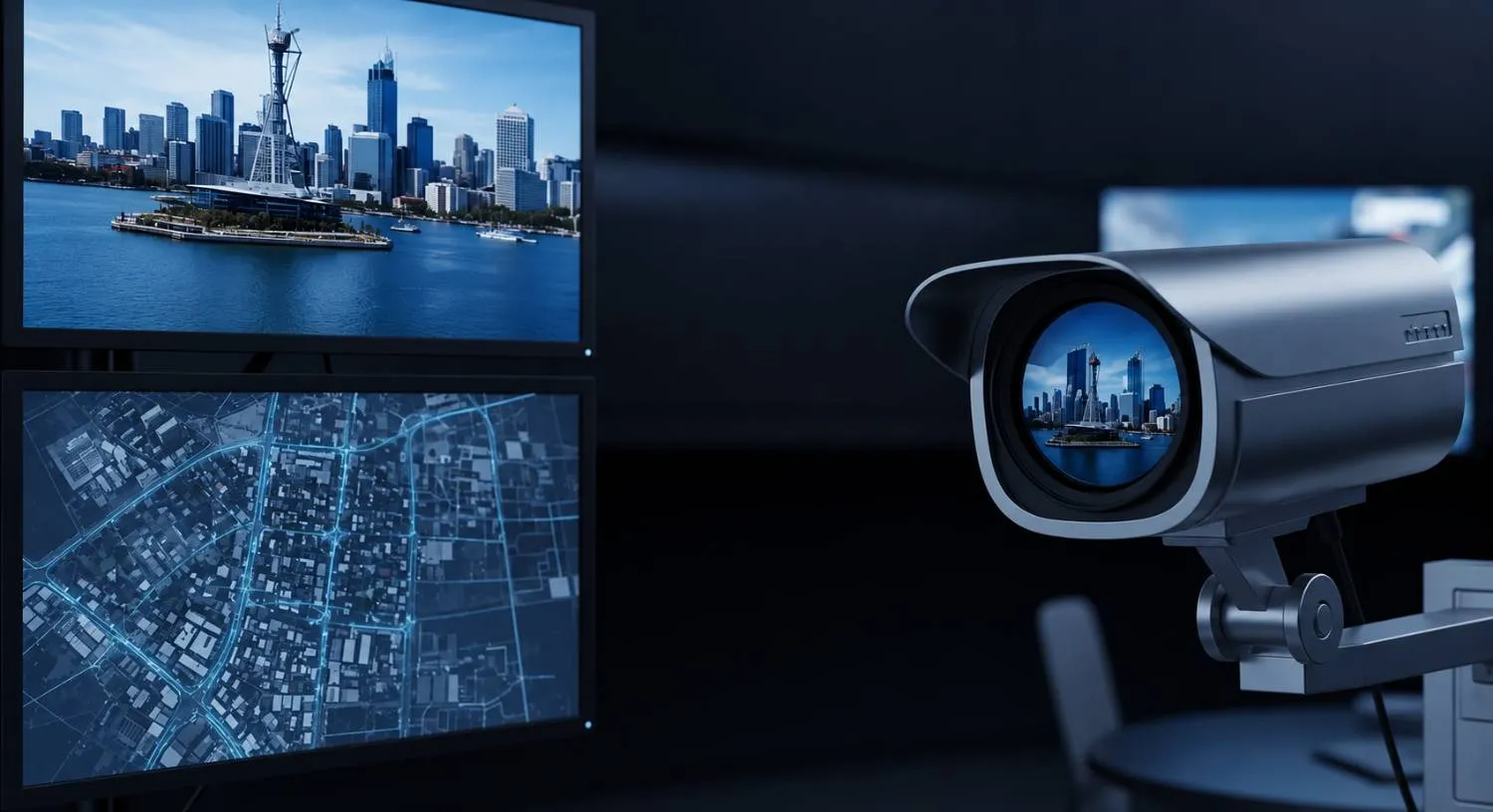
Worried about Perth CCTV hacking? Unsecured cameras are a gateway for hackers to breach your entire IT network. Learn how to protect your business in 2026.
Table of Contents
The Alarming Rise of Perth CCTV Hacking: A 2026 Warning for both Residential and Commercial Operators
As Senior Security & ICT Specialists at Smart SYS, we’ve witnessed a dramatic and concerning evolution in the threats facing Perth’s residential and commercial sector. A decade ago, a CCTV system was a simple, standalone security tool. Today, it’s a powerful, networked data device. This integration brings immense capability, but also exposes it to a new and sophisticated class of threat: cyber-attack. The issue of Perth CCTV hacking is no longer a hypothetical scenario discussed in technical forums; it is a clear and present danger to both residential and commercial operators, and the risks are set to escalate dramatically by 2026.
Many small business managers believe their operation is too small to be a target. This is a dangerous misconception. Hackers are not always looking for a high-value corporate prize; often, they are looking for an easy entry point. Unsecured commercial CCTV systems are a favored target, providing a backdoor into your network, a tool for corporate espionage, or even a weapon to be used in larger-scale cyber-attacks. This article is a critical warning and a strategic guide to help you understand the threat of Perth CCTV hacking and how to build a robust defense.
Why Your CCTV System is a Prime Target
To effectively protect your assets, you must first understand your adversary’s motives. Hackers target residential and commercial CCTV systems for reasons that go far beyond simply wanting to watch your premises. In our experience, these are the primary drivers behind the rise in attacks.
- A Gateway to Your Core Network: A compromised CCTV camera is a trusted device sitting inside your firewall. For a hacker, this is a golden ticket. Once they control a camera, they can attempt to “pivot” from that device to attack more valuable targets on your network, such as your file server, point-of-sale system, or client database. The camera becomes the digital crowbar that pries open your entire network.
- Weaponisation for Botnets: Your CCTV system has processing power and an internet connection. Hackers aggregate thousands of these compromised devices—from cameras to routers—into a “botnet”. They then rent out this combined power to launch crippling Distributed Denial of Service (DDoS) attacks against major websites, businesses, or even government infrastructure. Your system becomes an unwitting soldier in a cyber war, which can lead to your internet connection being blacklisted.
- Corporate and Industrial Espionage: Are sensitive prototypes being developed on your workshop floor? Are confidential client meetings happening in your boardroom? A compromised camera or microphone provides a direct feed to your competitors. A sophisticated Perth CCTV hacking event can silently leak your most valuable trade secrets.
- Pre-Criminal Surveillance: The most straightforward motive remains one of the most common. Criminals can hack into your cameras to monitor staff routines, identify when your premises are unoccupied, locate valuable assets, and, most critically, disable the recording system just before a physical break-in. The system you installed for protection becomes an intelligence tool for the very people you want to deter.
- Liability and Reputational Damage: Imagine the footage from your medical practice, legal office, or retail changing rooms being streamed live on the internet. A breach of this nature causes irreparable damage to your brand and can lead to significant legal and financial penalties for failing to protect personal data. This is a nightmare scenario that a successful Perth CCTV hacking attack can easily create.
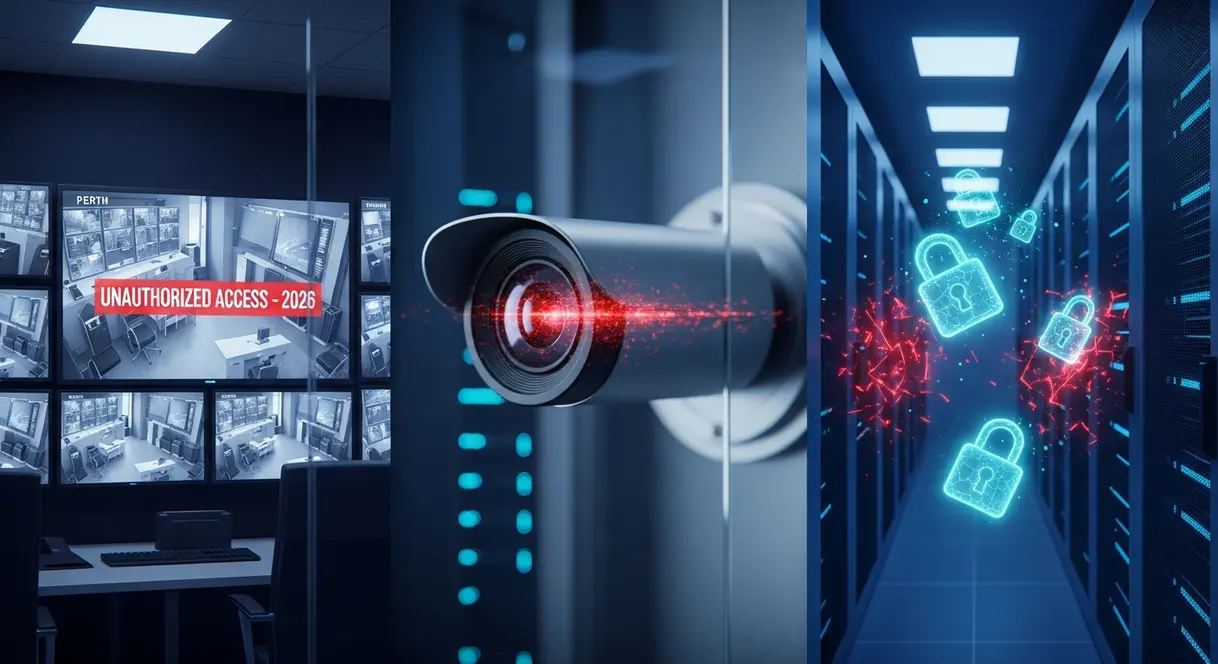

The Single Point of Failure: The Blame Game Between IT and Security
In our years of architecting and securing networks, we’ve identified a critical vulnerability that is not technical, but organisational. It’s the gap between your security system installer and your IT services provider. The scenario is dangerously common: a security contractor installs the cameras and connects them to the network, their job considered done. They are not network security experts. Your IT provider, whether an in-house team or an external contractor, sees the cameras as “someone else’s problem”—they didn’t procure them and don’t feel responsible for managing them. This creates a no-man’s-land of responsibility, and it’s in this gap that hackers thrive.
When a breach occurs, the blame game begins. The security company blames the network, and the IT company blames the security hardware. As the client, you are left in the middle, with a compromised system and no clear path to a solution. This is precisely why we established our Dual-Engine model at Smart SYS. We are a single team of experts in both ICT Services—like telecommunication, VoIP, and network infrastructure—and commercial Security Services, including CCTV, Alarms, and Access Control. We offer a Single Point of Accountability, eliminating the gaps and ensuring your entire system is designed and managed holistically. There is no blame game because we are responsible for the entire chain, from the camera lens to the network switch.
How Disconnected Management Leads to Perth CCTV Hacking
This organisational disconnect directly translates into technical vulnerabilities. When no single party has a complete overview, critical security measures are inevitably missed. The fragmented approach is a primary contributor to the rise of Perth CCTV hacking incidents across the residential and commercial sector. Here are the specific failures we consistently uncover:
- Flat, Unsegmented Networks: Without proper network design, CCTV cameras are placed on the same network as your reception PCs, servers, and staff WiFi. This is the equivalent of having no internal walls in your building; once a threat is inside, it can go anywhere.
- Default Credentials: Security installers, focused on physical installation, often leave the manufacturer’s default username and password (“admin/admin”) on the system. Hackers have automated scripts that scan the internet for devices with these exact credentials.
- Lack of Firmware Management: Like any software, the firmware on your cameras and Network Video Recorder (NVR) contains bugs and potential security holes. Manufacturers release updates to patch these holes, but if no one is assigned the responsibility to install them, your system remains permanently vulnerable.
- Insecure Remote Access: The need for remote viewing is common, but the method is critical. The easiest method, “Port Forwarding,” involves punching a hole directly through your firewall to the NVR. This is like leaving a key under the doormat and is a massive, unjustifiable security risk that we see all too often.
Beyond the Password: A Multi-Layered Defense Strategy
Securing your residential and commercial CCTV system requires a strategic, layered approach—what we in the industry call “defense in depth”. Relying on a single measure, like a strong password, is insufficient. True security is about creating multiple barriers, so if one fails, another is there to stop the attack. A comprehensive strategy to prevent a Perth CCTV hacking incident must address the physical, network, device, and access layers.
Layer 1: The Physical Foundation
Security starts with the physical world. Your digital security is only as strong as the physical security protecting the hardware.
- Secure the Recorder: Your Network Video Recorder (NVR) or Digital Video Recorder (DVR) is the heart of your system. It must be installed in a locked room, server rack, or steel enclosure. If an intruder can physically access the recorder, they can disable it, steal it, or plug in a device to access your network directly. –
- Professional Cabling: The integrity of your system depends on the quality of the connection. We insist on using properly certified Cat5E or Cat6 Ethernet cable. We frequently see system failures caused by cheap, non-certified cable and poor quality connectors that degrade over time, leading to signal loss and security vulnerabilities. Furthermore, our installation professionals are trained to deploy this cabling with precision, whether running exposed conduit on external brickwork or concealing it within wall cavities, all while knowing how to avoid damages to the building.
Layer 2: Network Architecture – The Digital Moat
This is the most critical and most frequently overlooked layer. It’s where the expertise of a combined ICT and Security specialist becomes indispensable.
- Network Segmentation (VLANs): The single most effective step you can take is to isolate your security devices. We achieve this by creating a Virtual Local Area Network (VLAN)—a separate, “quarantined” sub-network exclusively for your CCTV and Access Control devices. This acts like a digital moat. Even if a hacker manages to compromise a camera, they are trapped within the security VLAN and cannot see or attack your critical business systems like servers and PCs. Addressing this is a key step in preventing a devastating Perth CCTV hacking breach.
- Firewall Configuration: Your firewall is your network’s gatekeeper. It should be configured with a “default deny” policy for your security VLAN. This means that by default, no traffic is allowed in or out. We then create specific, explicit rules to only allow the bare minimum of traffic necessary for the system to function—for example, allowing the NVR to send a notification email, but blocking it from browsing the web.
Layer 3: Device Hardening
Once the network is secure, we must harden the devices themselves against direct attack.
- Strong, Unique Passwords: This is non-negotiable. Every camera, every NVR, and every user account must have a long, complex, and unique password. Default credentials must be changed during initial setup.
- Firmware Patching: We establish a formal process for monitoring, testing, and deploying firmware updates from the manufacturer. This is a critical, ongoing maintenance task that seals security holes as they are discovered. A system that is not regularly updated is a ticking time bomb.
- Disable Unused Services: Many network devices ship with extra services enabled for convenience, like UPnP (Universal Plug and Play) or Telnet. These services are often insecure and provide additional avenues for attack. We systematically disable all ports and services that are not absolutely essential for the system’s function.
Layer 4: Secure Remote Access
Providing remote access without compromising security is a delicate balance. This is where many businesses make fatal errors.
- VPN is the Only Way: The industry best practice for secure remote access is a Virtual Private Network (VPN). A VPN creates an encrypted, authenticated tunnel from your remote device (like a phone or laptop) directly into your network. You connect to the VPN first, and *then* you can access the NVR as if you were physically on-site. This means there are no open ports exposed to the public internet for hackers to find.
- The Dangers of P2P and Cloud Services: While convenient, many “easy” and “unreputable brands” remote access methods offered by budget brands rely on P2P (Peer-to-Peer) services that route through third-party servers, often in other countries. The security of these services can be questionable. When considering your options, it’s vital to weigh the risks and benefits; our detailed analysis of NVR vs Cloud CCTV Perth: A 2026 Cyber Risk Guide can help you make an informed decision on storage and access methodologies that align with your security posture.

Understanding the Real-World Risks of a Perth CCTV Hacking Incident
For a small business manager, the consequences of a breach are not abstract. A successful Perth CCTV hacking event can have immediate and catastrophic impacts on your operations, finances, and reputation.
First, you lose the very thing you invested in: security. When footage is deleted or cameras are disabled before a crime, you are left with no evidence for police or insurance. The system fails at its primary purpose, and you lose the ability to get high-quality, evidentiary-grade footage that supports accurate incident verification and liability protection. Second, a breach of cameras in sensitive areas can lead to ACCC investigations and severe fines under Australian privacy laws. The reputational damage from such an event can be even more costly, destroying customer trust built over many years.
Finally, your business could be held liable for attacks launched *from* your network. If your compromised CCTV system participates in a major DDoS attack, your company’s IP address will be identified. This can lead to your internet service being suspended and your business being blacklisted, cutting you off from customers, suppliers, and essential online services. The threat of Perth CCTV hacking is not just about what criminals can see; it’s about what they can do with your assets.
The Smart SYS ‘Single Point of Accountability’ Approach
We built Smart SYS to solve the dangerous gap between ICT and Security. Our integrated approach is designed to provide Perth small business managers with peace of mind by delivering a cohesive, robust, and professionally managed security posture. By choosing us, you are choosing a Single Point of Accountability. There is no finger-pointing, only solutions.
Our process is thorough and transparent:
- Comprehensive Audit: We begin by performing a deep analysis of your entire infrastructure. This includes your existing security hardware and your network architecture. We identify the weak points and understand the complete operational picture before making a single recommendation.
- Integrated Design: We architect a solution where your ICT and Security systems are designed to work together in a secure ecosystem. This means creating the right network segmentation, specifying the right hardware, and planning for secure remote access from day one. Our range of residential and commercial Security Services is always implemented with a network-first security mindset.
- Professional Installation & Commissioning: Our technicians are experts in both physical installation and network configuration. We ensure every component, from the Cat5E or Cat6 Ethernet cable to the NVR’s firewall rules, is deployed according to best practices. We don’t just make it work; we make it secure.
- Managed Services & Support: The threat landscape is constantly changing. We can provide ongoing management to assure your systems remain secure. This includes proactive firmware updates, security monitoring, and regular system health checks. This is the only way to truly mitigate the long-term risk of Perth CCTV hacking.
We understand that residential and commercial systems are an investment, not a subscription. Our professionally designed on-premise systems have no or minimal ongoing monthly fees, giving you full ownership and control over your security infrastructure.
A Checklist for Perth Small Business Managers
Use this checklist to perform a quick health check of your current CCTV system. If you answer “I don’t know” to most of these questions, it is a strong indicator that your system may be vulnerable.
- Is your NVR/DVR kept in a locked cabinet or secure room?
- Who is responsible for updating the firmware on your cameras and recorder? When was it last done?
- Are your CCTV devices on their own isolated network (VLAN), separate from your main office network?
- How do you view your cameras remotely? If you are not using a VPN, your system is likely exposed.
- Have the default passwords for all your cameras and the recorder been changed to strong, unique passwords?
- Was your system installed by a licensed security professional who also has demonstrated expertise in network security?
Your Next Step Towards a Secure 2026
As we move towards 2026, the convergence of physical and digital systems will only accelerate. The threat of Perth CCTV hacking will grow in complexity and severity. Taking a proactive stance on your cyber-physical security is not just good practice; it’s an essential element of modern business risk management. Don’t wait for a breach to expose the weaknesses in your defenses.
We urge you to use the information in this article to assess your own security posture. While we provide the technical framework for a strong defense, it’s also crucial for all staff to be aware of general cyber threats. The Australian Cyber Security Centre offers excellent resources for protecting yourself online. For a professional, no-obligation assessment of your residential or commercial CCTV and network security, contact our team at Smart SYS. We are here to be your partner in security, providing the single point of accountability you need to operate with confidence.
Frequently Asked Questions
Why would a hacker target my small business’s CCTV in Perth?
Hackers target small businesses because their systems are often an easy entry point. A compromised camera can be a gateway to your main business network to steal data, a tool for corporate espionage, or be used in larger cyber-attacks. Criminals also hack cameras to plan physical break-ins by monitoring routines and identifying valuable assets.
What’s the biggest security mistake businesses make with their CCTV systems?
The biggest mistake is the organisational gap between the security installer and the IT provider. When no single party is responsible for the overall network security of the CCTV system, critical tasks like changing default passwords, updating firmware, and correctly configuring the network are missed. This creates a ‘no-man’s-land’ of responsibility where hackers thrive.
How can I safely view my CCTV cameras remotely without being hacked?
The industry best-practice for secure remote access is a Virtual Private Network (VPN). A VPN creates a secure, encrypted tunnel from your phone or computer directly to your business network. This prevents your system from being exposed to the public internet, unlike risky methods like ‘Port Forwarding’ which essentially leaves a door open for hackers.
What is the most effective technical step to prevent CCTV hacking?
The single most effective technical measure is network segmentation using a Virtual Local Area Network (VLAN). A VLAN creates a separate, ‘quarantined’ sub-network for your security devices. This acts like a digital moat, so even if a camera is compromised, the attacker is trapped and cannot access your critical business systems like servers, PCs, or client databases.
Don’t Let a Hacked Network Become Your Headline.
The Perth incident is a stark reminder: your network is the front door for cybercriminals. A single vulnerability can expose your entire operation. Our expert ICT team can audit, fortify, and manage your network to protect your business from becoming the next warning.






![Perth 4-Camera CCTV Price [2026]: Don't Pay More Than This](https://smartsys.com.au/blog/wp-content/uploads/2026/05/4-camera-cctv-installation-cost-perth-300x300.webp)



Post Comment