NVR vs Cloud CCTV Perth: A 2026 Cyber Risk Guide
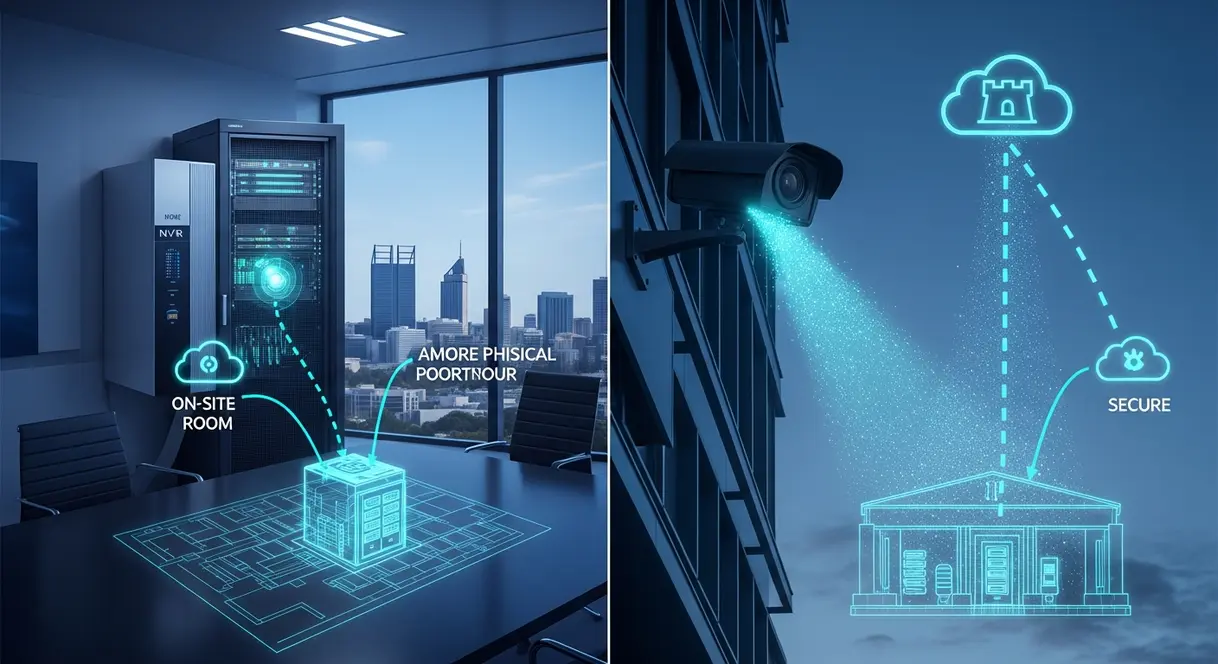
Perth business? Learn the key differences in the NVR vs Cloud CCTV debate. Our 2026 guide details the cybersecurity risks to keep your assets safe.
Table of Contents
Navigating the Future: A Perth Small Business Manager’s Guide to NVR vs Cloud CCTV
As a small business manager in Perth, you’re constantly balancing growth, operations, and risk. When it comes to your commercial security system, the decisions you make today will echo for years. The conversation around NVR vs Cloud CCTV has evolved far beyond a simple storage preference. By 2026, it will be a foundational pillar of your cyber risk management strategy. The wrong choice doesn’t just mean losing footage; it can mean exposing your entire network, compromising client data, and facing significant operational downtime.
At Smart SYS, we architect and manage integrated ICT and Security solutions for Perth’s commercial sector. We see firsthand the consequences of disjointed systems. Our core principle is to act as your Single Point of Accountability. This means the buck stops with us. There’s no finger-pointing between your IT provider and your security installer, because we are one and the same. We understand that a CCTV camera is a network device, and its security is inseparable from your overall ICT infrastructure. This guide is designed to give you the clarity you need to navigate the complex choice between NVR and Cloud CCTV solutions.
The Foundation: Understanding Your Core Choices
Before diving into a direct comparison, it’s crucial to understand what each technology truly represents. They are fundamentally different architectures, each with its own set of responsibilities for you, the system owner.
What is a Network Video Recorder (NVR)?
An NVR is a purpose-built, on-premise digital appliance. Think of it as a specialised computer whose sole job is to receive, process, and store video footage from your IP (Internet Protocol) cameras. Here’s how it works:
- On-Site Storage: Footage is recorded to internal hard drives located within the NVR, which is physically kept at your premises. You have complete physical control over the device and the data it holds.
- Local Network Operation: Cameras are connected to the NVR, typically using structured cabling like Cat5E or Cat6 Ethernet cable, forming a local network. The system can operate perfectly without any internet connection, recording 24/7.
- Capital Expenditure: You purchase the hardware (NVR, cameras, hard drives) upfront. For commercial-grade systems, this means there are no or minimal ongoing monthly fees for storage, which is a significant long-term cost advantage.
- Control & Responsibility: You control everything, but you are also responsible for everything—from the physical security of the recorder to the configuration of secure remote access.
What is Cloud CCTV?
Cloud CCTV, often marketed as Video Surveillance as a Service (VSaaS), is a completely different model. Instead of storing footage on-site, your cameras stream video directly to remote servers owned and operated by a third-party provider.
- Remote Storage: Your “evidentiary-grade footage” is encrypted and uploaded via your internet connection to a data centre. You are trusting the cloud provider’s security and infrastructure.
- Internet Dependant: This is the crucial point. Without a stable, high-speed internet connection—specifically, sufficient upload bandwidth—a cloud system is either ineffective or completely useless. Any internet outage means no recording.
- Operational Expenditure: It’s a subscription model. You pay a monthly fee per camera. This can seem attractive upfront, but these costs accumulate significantly over the life of the system, especially as you add more cameras or require longer storage retention.
- Convenience & Delegation: The primary benefit is ease of access through a smartphone app and the delegation of hardware maintenance (the servers) to the provider.

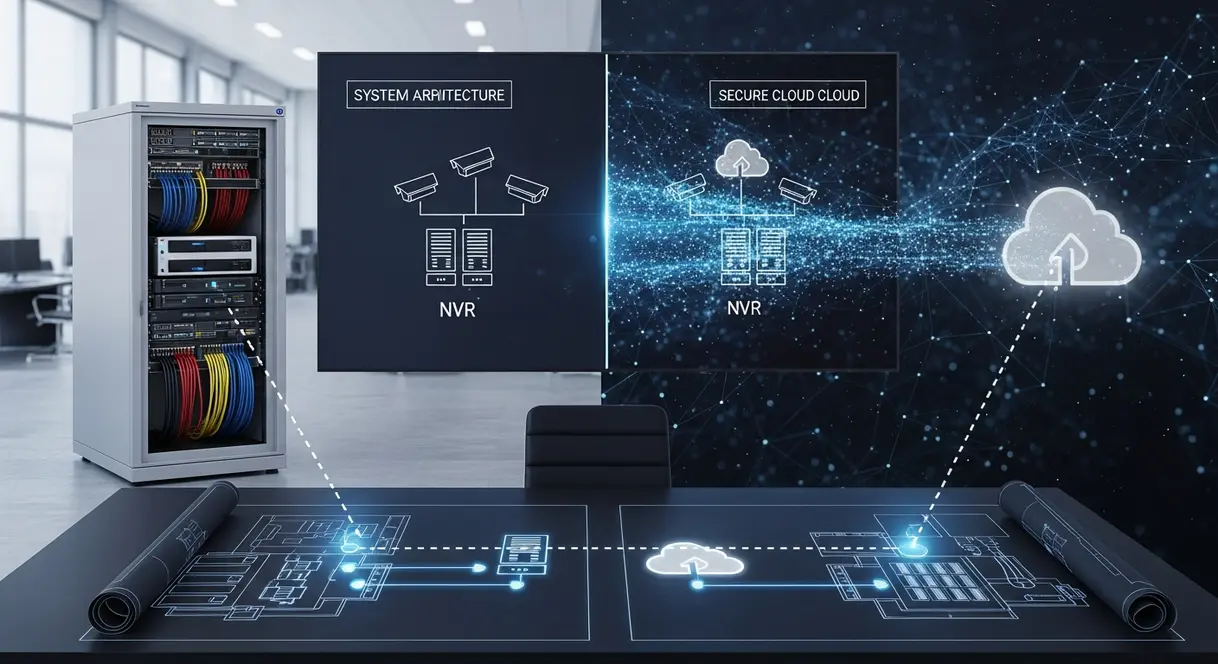
The 2026 Cyber Risk Showdown: NVR vs Cloud CCTV
The core of the NVR vs Cloud CCTV debate for a prudent small business manager is risk mitigation. Both systems can be secure, and both can be vulnerable. Understanding where those vulnerabilities lie is key to making a decision that strengthens your security posture, rather than weakening it.
Data Sovereignty and Control
NVR: With an NVR, your data resides on your property. You know where it is, who has access to the physical device, and that it falls under Australian privacy laws. You have absolute control. This is a powerful position, especially when dealing with sensitive areas or liability incidents.
Cloud: Your data is in the hands of a third party. Where is that data centre located? Is it in Australia, or is it in a country with different privacy laws? A provider’s terms of service can change, and in the event of a dispute or the provider going out of business, regaining access to your historical footage can be a complex legal battle. You are delegating control, and with it, a degree of risk.
Network Security and Vulnerabilities
This is where our role as a combined ICT and Security agency becomes critical. A poorly configured system of either type is a security risk.
NVR Risks: The biggest risk with an NVR is improper network configuration. Many installers will use “port forwarding” to enable remote access. This is akin to leaving a side door of your digital house wide open for automated bots to find and attack. A secure NVR setup requires a properly configured firewall and ideally a VPN (Virtual Private Network) for remote access. This is an ICT task, not a job for a basic camera installer. Furthermore, the NVR itself must be physically secured to protect it from theft or damage.
Cloud Risks: The risks here are different but just as potent. Your entire system’s security hinges on your internet connection and the cloud provider’s own cyber Defence. A Distributed Denial of Service (DDoS) attack on your provider could take your cameras offline. Weak passwords on your cloud account can lead to a complete takeover. And the most significant risk: your entire camera network is perpetually connected to the public internet, creating a constant, attackable surface.
Bandwidth and Performance
In Perth, with the varying quality of NBN connections, bandwidth is a non-negotiable consideration in the NVR vs Cloud CCTV discussion.
NVR: An NVR system uses zero of your external internet bandwidth for its primary function of recording. It only consumes upload bandwidth when you are actively viewing the cameras remotely. This makes it highly reliable and predictable, with no impact on your business’s other critical online activities.
Cloud: A cloud system is a massive, constant drain on your upload bandwidth. Each camera continuously streams video to the internet. For a small office with several cameras, this can saturate the connection, slowing down everything from VoIP calls to file transfers and payment processing. Before even considering a cloud solution, a thorough analysis of your internet service is mandatory.
Cost Implications: CapEx vs OpEx
How you prefer to manage your budget is a major factor.
NVR: This is a classic Capital Expenditure (CapEx). You have a higher upfront cost for the professional installation and hardware. Our professional installers are trained to work meticulously, planning cable runs to avoid damages to the building whether it involves running exposed conduit on an external brick wall or concealing cabling within wall cavities. However, after this initial investment, your ongoing costs are minimal, limited to electricity and potential hard drive replacement every few years. This predictable model is often preferred for long-term financial planning.
Cloud: This is an Operational Expenditure (OpEx). The upfront hardware cost may be lower, but you are locked into a perpetual monthly subscription fee per camera. These fees can quickly eclipse the initial cost of an NVR system within just a couple of years. We find many small business managers are caught by surprise when they calculate the total cost of ownership over a five-year period.
The Smart SYS Advantage: Ending the Blame Game
We’ve seen it countless times: a small business invests in a new commercial CCTV system. A few months later, the remote viewing is slow or unreliable. The security installer says “It’s not our cameras, it’s your slow internet” and points the finger at the IT company. The IT company runs a speed test, says “The internet is fine,” and blames the CCTV equipment. You, the client, are stuck in the middle with a system that doesn’t work and two contractors pointing fingers.
This is where our “Single Point of Accountability” model is your greatest asset. At Smart SYS, we manage the entire ecosystem.
- We provide the ICT & Network Services (Managed IT, Support). We understand, configure, and secure the network that your security system relies on. Our ICT services cover the full spectrum of modern communications: Telecommunication, VoIP, unified group communication, and real-time collaboration, all underpinned by robust network infrastructure.
- We provide the Security Services. We design, install, and maintain your CCTV, alarms, and access control systems. We know they are network devices and treat them with the appropriate level of cyber hygiene.
When you partner with us, the debate of NVR vs Cloud CCTV becomes a strategic conversation, not a technical guessing game. We can analyse your network, understand your operational needs, and architect the right solution. If you choose an NVR, we are the ones who configure the firewall and VPN for secure access. There is no blame game. There is only a solution.

Advanced Considerations for a Superior Commercial System
A true commercial security solution goes beyond the basic choice of storage. At Smart SYS, we believe in educating our clients to make informed decisions for long-term value.
Why Cabling and Installation Quality Matter
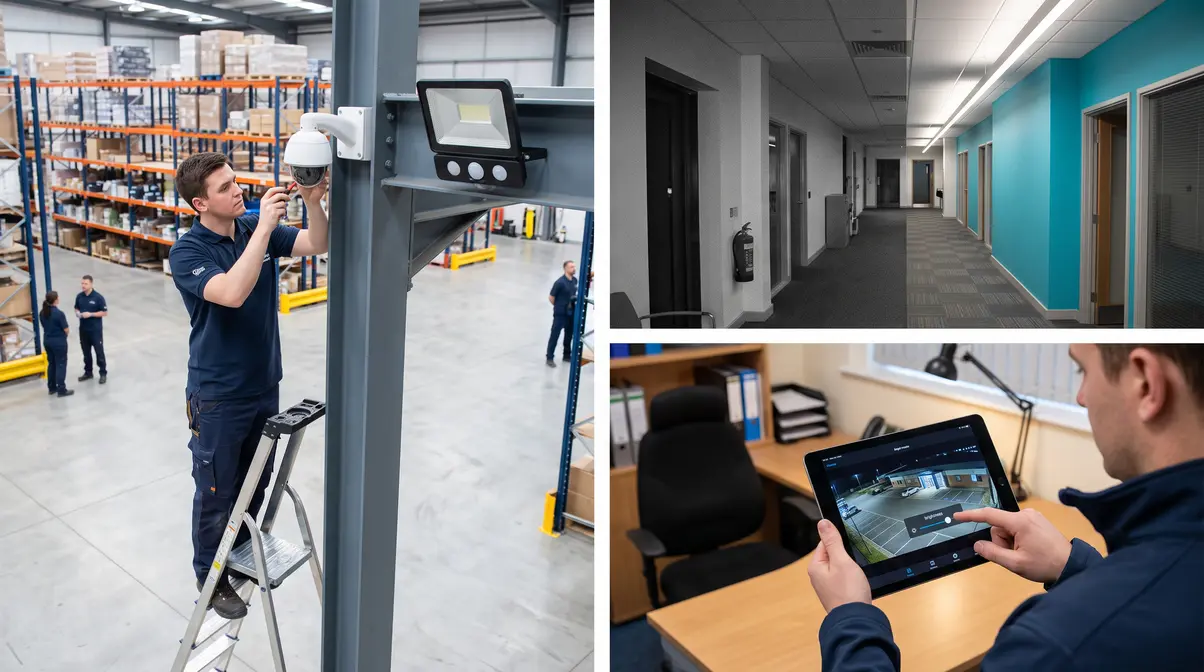
The backbone of any reliable IP security system is the physical network. The use of cheap, non-certified cable and poor quality connectors is a leading cause of system failure, leading to flickering images, poor night vision performance, and complete camera dropouts. We insist on using certified Cat5E or Cat6 Ethernet cable and professional termination techniques. Furthermore, understanding the building itself is critical. Assessing existing infrastructure and determining the complexity of the installation is part of our comprehensive survey process, allowing us to assure a robust and tidy outcome.
Moving Beyond Resolution Hype
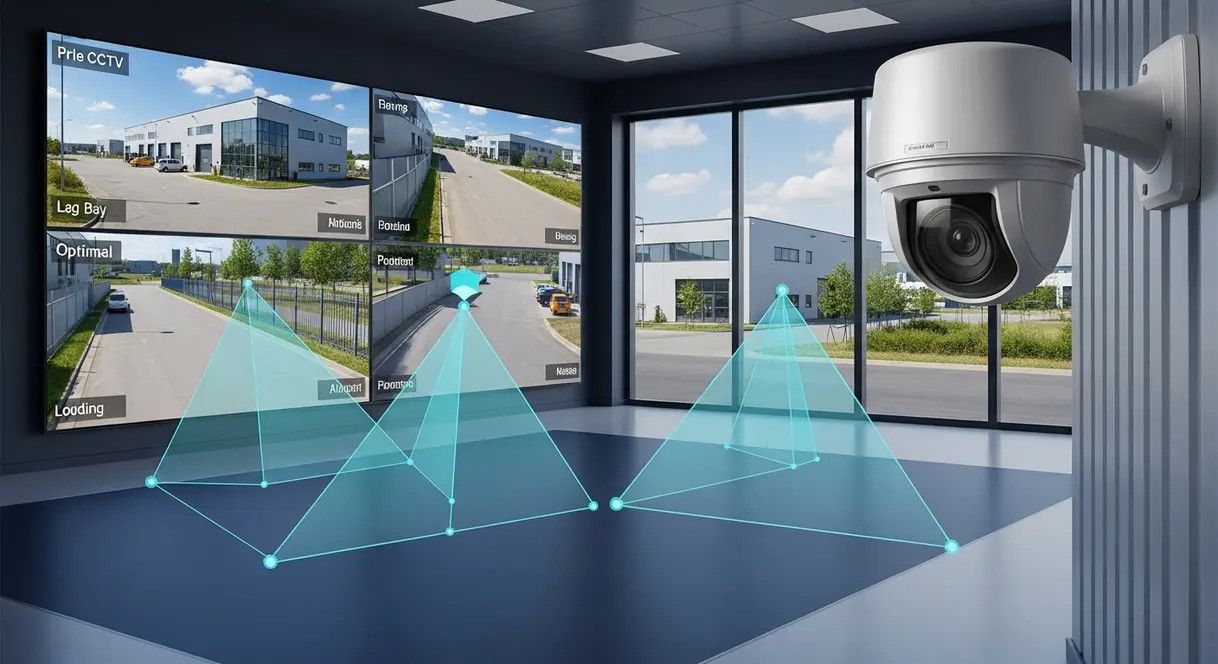
Many competitors will try to sell you on “4K” resolution. While pixel count is a factor, it is not the sole determinant of a useful image. Our philosophy is that high-quality CCTV systems provide clear, evidentiary-grade footage that supports accurate incident verification and liability protection. This is achieved through a balanced combination of a quality sensor, appropriate lens, sufficient frame rate (fps), and effective video compression, all tailored to the specific scene being monitored.
The Hybrid Model: A Viable Third Option
For many Perth businesses, the most robust solution isn’t a strict binary choice. The NVR vs Cloud CCTV decision can often be resolved with a hybrid approach. This involves using an NVR as the primary, high-resolution, 24/7 recording system on-site. Then, for critical cameras (e.g., covering cash registers or entry/exit points), you can configure a secondary, lower-resolution stream to be backed up to a cloud service based on motion events. This gives you the on-site control and reliability of an NVR with the off-site redundancy of the cloud for critical incidents. This layered strategy is a cornerstone of a more detailed discussion about storage, and you can learn more by reading our comprehensive NVR vs Cloud Storage: The Ultimate 2026 CCTV Guide.
Your Perth NVR vs Cloud CCTV Decision Checklist
To help you frame your thinking, ask yourself these questions:
- Internet Health: What is my tested, consistent upload speed? Can my business function if a significant portion of that is dedicated to CCTV?
- Data Control: How comfortable am I with a third party holding my security footage? Are there any regulatory or insurance requirements for on-site data retention?
- Budget Structure: Do I prefer a one-time capital investment with predictable, low ongoing costs (NVR), or a subscription-based operational expense that will continue indefinitely (Cloud)?
- Scalability: How many cameras do I need today? How many might I need in three to five years? An NVR’s capacity is fixed, while a cloud service can scale more fluidly, albeit at a recurring cost.
- Physical Risk: Is my premises at high risk of burglary, fire, or flood that could destroy an on-site recorder? If so, a hybrid or off-site backup strategy is essential.
- Accountability: Who will be responsible for securing the network for remote access? Do I have an integrated plan or separate contractors?
Partnering with Smart SYS for a Secure and Integrated Future
The choice between NVR vs Cloud CCTV is not trivial. It’s a strategic decision that impacts your budget, your operations, and your cyber-security posture for years to come. As you plan towards 2026 and beyond, viewing your CCTV system as an isolated product is a mistake. It is a data-generating, network-connected component of your business’s technology ecosystem.
At Smart SYS, we don’t just sell you a box or a subscription. We start by understanding your Perth-based business, your risks, and your operational goals. We provide a single, expert point of contact for your entire security and ICT infrastructure. We help you move past the confusing marketing and make an informed decision that truly mitigates risk and provides lasting value. To enhance your business’s overall security posture, we also recommend reviewing the excellent resources provided by the Australian government, such as these small business cyber security guides from the Australian Cyber Security Centre.
If you’re tired of the blame game and want a partner who can provide a holistic, secure, and fully managed solution, contact Smart SYS today. Let us help you architect a system that is not only effective today but resilient for the challenges of tomorrow.
Frequently Asked Questions
What’s the main difference between NVR and Cloud CCTV?
The main difference is where your footage is stored. An NVR system uses a physical device on your premises, giving you full control and allowing it to record without an internet connection. Cloud CCTV sends your footage via the internet to be stored on a third-party’s servers, requiring a constant and stable internet connection to function.
Which is better for a small business budget, NVR or Cloud?
It depends on your budget model. An NVR is a capital expenditure (CapEx) with a higher upfront cost but minimal ongoing fees. A Cloud system is an operational expenditure (OpEx) with lower initial costs but a perpetual monthly subscription per camera, which often proves more expensive in the long run.
Will a Cloud CCTV system slow down my business’s internet?
Yes, it’s a major risk. Cloud cameras constantly upload video, consuming significant upload bandwidth. This can slow down other essential online activities for your business, such as payment processing, file transfers, and VoIP calls. An NVR system only uses bandwidth when you actively view footage remotely.
Is an NVR or Cloud system more secure?
Both systems have different security risks. An NVR’s security depends on securing your local network (e.g., using a VPN for remote access) and the physical recorder. A Cloud system’s security is delegated to the provider and your account’s password strength. With an NVR, you retain data sovereignty, meaning your footage stays on your property and under your control, which is a significant security advantage.
Future-Proof Your Perth Business Against CCTV Cyber Risks
The wrong CCTV choice can leave you vulnerable. Our Perth security specialists will assess your premises and design a robust, future-ready system that meets your specific needs and budget.
Post Comment