Cheap Alarm Systems Perth: Serious Privacy Breach Risks
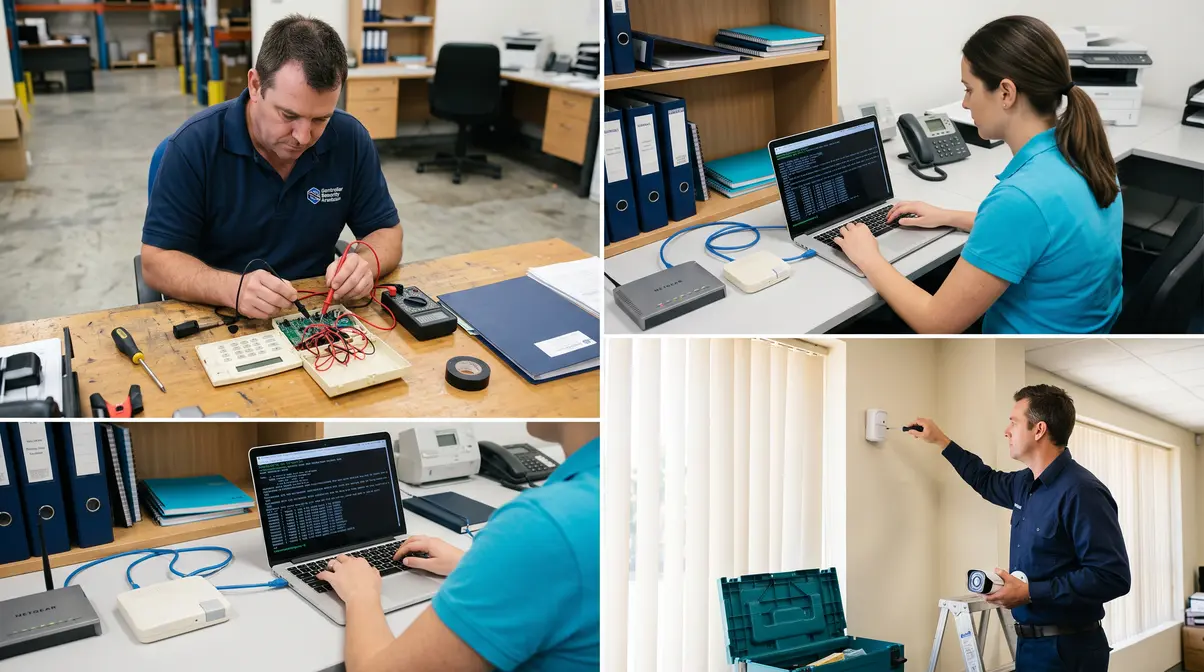
Are cheap alarm systems Perth businesses use risking private customer data? Discover critical security vulnerabilities and compliance risks in 2026.
Table of Contents
The Hidden Dangers of Cheap Alarm Systems Perth Small Businesses Face
In the competitive Western Australian commercial landscape, managing operational expenditure is a constant priority for small business managers. When safeguarding commercial premises in industrial hubs like Malaga, Welshpool, Osborne Park, and the Perth CBD, cutting overheads can be tempting. However, opting for cheap alarm systems Perth suppliers import from unvetted overseas manufacturers introduces severe, often irreversible vulnerabilities to your commercial premises, critical data, and corporate reputation.
At Smart SYS, we architect end-to-end commercial infrastructure designed to defend physical premises and enterprise communications. As a Senior Security & ICT Specialist team, we consistently observe the fallout when small business managers deploy consumer-grade hardware in high-risk commercial environments. What initially appears to be a cost-effective purchase frequently results in compromised client confidentiality, network infiltration, physical security failures, and non-compliance penalties under Australian privacy laws.
Understanding the distinction between uncertified retail budget alarms and engineered commercial security is vital for any commercial entity. Security is fundamentally an exercise in risk mitigation. Settling for subpar equipment compromises the operational integrity of your entire organisation.
Why Cheap Alarm Systems Perth Imports Compromise Commercial Privacy
Many off-the-shelf budget alarm packages rely heavily on insecure infrastructure to maintain low price points. When evaluating cheap alarm systems Perth small business managers often overlook where data is routed, how firmware updates are managed, and how communication signals between sensors and monitoring stations are encrypted.
Substandard alarm panels frequently transmit system status, arming codes, user telemetry, and operational schedules across unencrypted wireless frequencies or through poorly protected offshore cloud platforms. When budget systems broadcast telemetry over public, unauthenticated networks, unauthorised third parties can intercept alarm state transmissions. This grants threat actors immediate visibility into staff arrival times, opening hours, scheduled maintenance routines, and after-hours operational lulls.
Furthermore, many generic alarm diallers and companion applications route your commercial data through third-party overseas cloud servers that do not comply with Australian data residency standards. These servers often operate with unpatched vulnerabilities, hardcoded administrative passwords, and outdated firmware. If an overseas server suffers an exploit, your commercial contact lists, building layouts, access pin codes, and duress triggers are exposed to malicious actors.
Under the Privacy Act 1988 and the Australian Privacy Principles (APPs), Australian commercial entities bear strict legal obligations to secure operational and customer information against unauthorised access, misuse, and data compromise. You can review your mandatory legal obligations under the Office of the Australian Information Commissioner (OAIC) regulatory guidelines. Deploying insecure hardware that leaks operational records or facilitates unauthorised entry exposes commercial organisations to severe regulatory penalties and substantial reputational damage.

The Technical and Physical Flaws of Budget Alarm Hardware
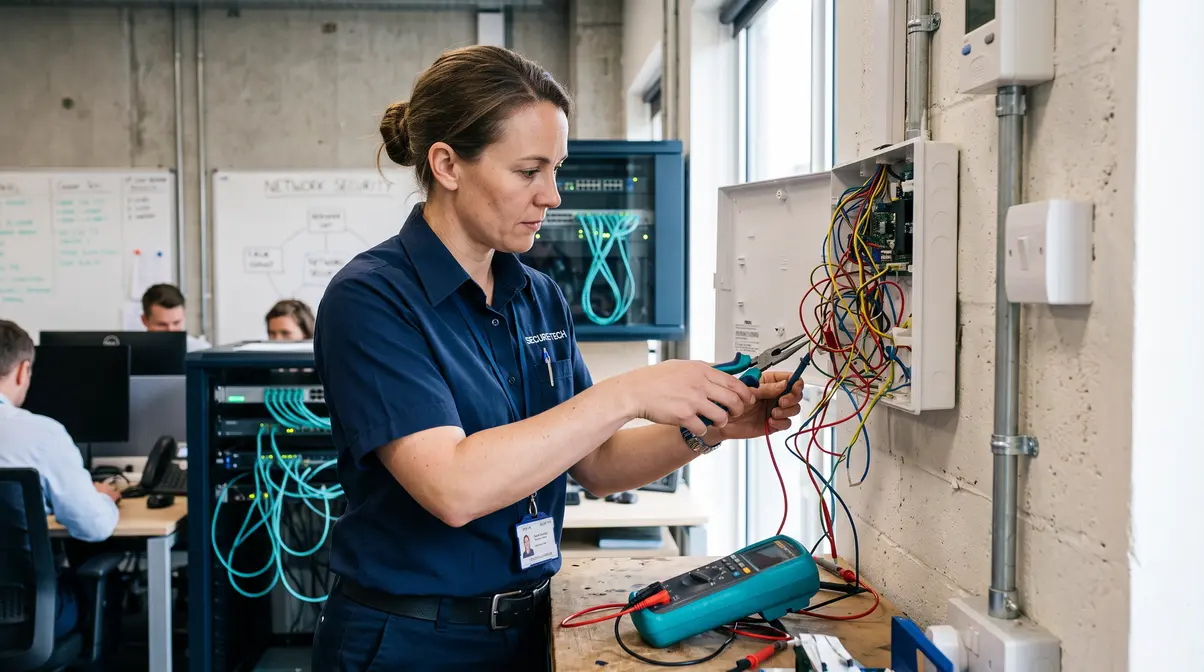
To produce budget hardware at rock-bottom prices, manufacturers compromise on component quality, material resilience, and radio-frequency security. When examining the underlying architecture of cheap alarm systems Perth retailers stock, our technical team regularly identifies multiple hardware points of failure:
- Unencrypted Wireless Frequencies: Cheap wireless motion detectors and door reeds frequently communicate with the central control panel across legacy 433MHz or 868MHz radio bands without rolling encryption keys. Attackers using simple software-defined radios (SDR) or basic RF jammers can overwhelm or clone these signals, blinding the system without triggering a physical tamper alert.
- Susceptibility to Environmental False Alarms: Western Australia’s harsh climate—characterised by extreme summer heat and rapid temperature swings—wreaks havoc on low-grade passive infrared (PIR) sensors. Inexpensive sensors lack dual-technology optics (combining PIR with microwave detection) and digital temperature compensation, leading to chronic false alarms that exhaust monitoring resources and frustrate local authorities.
- Substandard Backup Power Management: Commercial alarms require robust battery backup systems capable of sustaining extended mains power outages. Budget kits employ inferior sealed lead-acid or uncertified lithium cells with inadequate charging circuits, causing premature cell degradation and system failure precisely when power grids fluctuate during severe Perth storms.
- Absence of Anti-Masking and Tamper Defence: Commercial grade sensors incorporate active infrared anti-masking technology to detect if an intruder has sprayed paint, placed tape, or positioned an obstacle over the lens while the facility was disarmed during trading hours. Cheap alarm systems lack anti-masking safeguards entirely, rendering them useless against premeditated break-ins.
Network Convergence: Protecting Enterprise Infrastructure from Perimeter Exploits
A critical technical distinction must be maintained when designing integrated commercial facilities: an intruder alarm panel is an alert-driven signalling apparatus, whereas IP-based components such as commercial CCTV and Access Control systems operate as dedicated network devices. When small business managers procure unregulated cloud platforms linked to cheap alarm systems Perth buyers purchase online, they often bridge unverified equipment into the same operational environment that houses their primary local area network.
If uncertified network equipment or unmanaged bridges are introduced alongside your communication channels, threat actors can leverage poorly defended entry points to pivot into internal subnets. We explore these exact threat vectors in our technical analysis of Perth CCTV hacking and network vulnerabilities. When cheap consumer hardware is combined with unified telecommunication channels, VoIP systems, or real-time collaboration suites, a flaw in external-facing hardware can undermine your core network infrastructure.
At Smart SYS, our Dual-Engine model ensures complete technological synchronisation. We manage both ICT Services—including telecommunication, VoIP, unified group communication, real-time collaboration, and structured network infrastructure—and physical Security Services covering commercial alarms, commercial CCTV, access control, fire alarm monitoring, and duress alarm architectures. By maintaining strict network segmentation, access control lists (ACLs), and isolated Virtual Local Area Networks (VLANs), we assure that telemetry signals never compromise corporate IT operations.

The Installation Disaster: Cabling Hazards and Building Damage
The risks associated with budget security products extend well beyond the hardware itself; they are heavily compounded by deficient installation practices. When analysing the installation protocols of cheap alarm systems Perth contractors deploy, we frequently uncover severe workmanship defects that compromise both building integrity and system longevity.
Budget installers often utilise cheap, non-certified cable and poor quality connectors to minimise installation turnaround time. Using non-compliant, copper-clad aluminium (CCA) wiring instead of solid bare-copper Cat5E or Cat6 Ethernet cable leads to packet loss, signal degradation, voltage drops over long runs, and elevated fire risks within roof spaces. In industrial commercial settings where electrical noise from machinery, variable frequency drives, and heavy lighting ballasts is present, unshielded low-grade wiring acts as an antenna for electromagnetic interference (EMI), creating continuous fault loops.
Engineering Standard Note:
Our licensed technicians engineer every physical layout using verified, high-performance Cat5E or Cat6 Ethernet cable for all network integrations, adhering strictly to AS/CA S009 cabling standards. We ensure robust cable termination, high-grade patch fields, and structural conduits that insulate your signalling pathways from environmental degradation and physical tampering.
Furthermore, inexperienced budget contractors routinely cause irreversible physical damage to commercial buildings. Incorrectly drilling through structural tilt-up concrete panels, breaching water-resistant building envelopes without silicone grommets, cracking external architectural render, or penetrating fire-rated acoustic ceiling barriers without installing rated fire pillows severely undermines the value and safety of your property. Our certified specialists know precisely how to avoid damages to the building, executing clean, architecturally sensitive cable management that preserves commercial aesthetics, structural integrity, and local council compliance.
Installation Complexity: Assessing Existing Infrastructure
Every commercial property presents a unique structural profile. Whether refitting an older multi-tenancy warehouse in Welshpool or outfitting a modern corporate office in West Perth, leveraging existing infrastructure requires careful engineering assessment before any device is installed. Budget security providers frequently apply a one-size-fits-all approach, forcing modern equipment onto legacy infrastructure that cannot support it.
Installation complexity varies significantly across commercial properties. For example, our technical deployment protocols account for:
- Exposed Conduit on External Brick: Demands heavy-duty, UV-stabilised, impact-resistant PVC or galvanised steel metallic conduit with water-sealed junction boxes, mechanical compression glands, and masonry anchors to resist physical tampering and severe WA weather conditions.
- Concealed Cabling in Wall Cavities: Requires specialized cable pulling techniques, stud-finding verification, and acoustic dampening to route pathways through complex multi-layered drywall and cavity insulation without breaching fire-rated partitions or slicing through internal electrical lines.
- Suspended Ceilings and Cable Trays: Demands structured J-hooks, cable tray routing, and compliance clearances away from high-voltage 415V electrical lines to prevent crosstalk and maintain strict workplace safety standards.
- Multi-Building Campus Links: Requires surge protection devices (SPDs), fibre-optic breakout runs, or licensed microwave links to securely bridge detached workshops, loading docks, and remote offices without introducing ground-loop voltage differentials.
By conducting a rigorous physical audit of your existing infrastructure, our team ensures that all containment pathways, junction nodes, and device placements are structurally sound, fully protected, and engineered for high availability.

The Blame Game: Why Single-Point Accountability Matters
One of the most persistent operational hurdles small business managers encounter is the friction between independent IT contractors and external physical security installers. When relying on disjointed, cheap alarm systems Perth enterprises inadvertently create an operational vacuum between these two critical divisions.
When an alarm panel fails to trigger monitoring signals, when network-attached video systems drop off-line, or when an access control controller loses sync with the central directory, the traditional security installer blames the IT contractor’s firewall configuration. Conversely, the IT contractor blames the security installer’s unmanaged hardware. The small business manager is caught in the middle, paying dual hourly callout fees while the commercial premises remain vulnerable.
| Operational Factor | Budget Disjointed Contractors | Smart SYS Dual-Engine Model |
|---|---|---|
| System Accountability | IT and security contractors blame each other for dropouts | Single Point of Accountability across all ICT and security systems |
| Cabling Standards | Cheap, non-certified cable and poor quality connectors | Certified solid Cat5E Cat6 or Cat6A Ethernet cable and high-grade termination |
| Network Integration | Unmanaged network devices plugged into flat, insecure networks | Isolated VLANs, firewall policies, QoS, and unified ICT architecture |
| Physical Installation | Building envelope damage, exposed wires, unsealed brick penetrations | Architecturally sound practices designed to avoid damages to the building |
Our unique value proposition is acting as your Single Point of Accountability. Because we engineer both your ICT network infrastructure (including telecommunication, VoIP, unified group communication, and real-time collaboration platforms) and your physical Security Services (alarms, CCTV, access control, fire alarm monitoring, and duress alarm systems), there is zero finger-pointing. We oversee the end-to-end operational integrity of your hardware, cabling, routing, and signalling protocols.
The True Financial Equation: Hidden Costs of Cheap Alarm Systems
The low upfront sticker price of substandard security packages is an illusion. When evaluating the total cost of ownership for cheap alarm systems Perth consumers adopt, hidden operational expenses accumulate rapidly. Budget systems frequently lock business operators into expensive, mandatory proprietary cloud subscription fees just to receive basic push notifications or arm their systems via a mobile device.
In contrast, we architect commercial-grade systems that prioritise ownership, durability, and cost predictability. Our commercial alarm and access control deployments are built to operate with no or minimal ongoing monthly fees for baseline operational management. Small business managers retain ownership and control over their local equipment without being forced into restrictive multi-year SaaS contracts for core functionality.
When investing in professional infrastructure, baseline pricing must reflect authentic, commercial-grade engineering. Professional security system refits and enterprise deployments from Smart SYS start from clear, competitive baseline rates:
- Commercial Alarm Refits: Starting from $1,250 (tailored to building size, zone density, and perimeter layout).
- Integrated Access Control Subsystems: From $1,800 (engineered around specific door hardware, electric strikes, and reader requirements).
- Commercial IP Video Interlocking: Starting from $2,200 (including certified Cat6 data cabling, structured patch fields, and isolated network management).
By eliminating proprietary platform markups and engineering infrastructure correctly from day one, we assure our clients lower total cost of ownership over a standard 5-to-10-year operational life cycle.
Compliance, ACCC Alignment, and Realistic Risk Mitigation
In the physical and electronic security industry, misleading claims are unfortunately common. Providers of low-end consumer alarms frequently mislead commercial buyers by promising “100% impenetrable security” or making unverified guarantees. Under Australian Consumer Law enforced by the Australian Competition and Consumer Commission (ACCC), small business managers have the right to transparent, substantiated claims regarding hardware capability.
At Smart SYS, we do not make unsubstantiated claims of absolute invulnerability, nor do we issue misleading guarantees. In professional ICT and electronic defence, true security is defined by rigorous Risk Mitigation. We assess your physical perimeter, operational access flows, telecommunication links, and structural vulnerabilities to eliminate single points of failure. While no system can claim absolute immunity against every conceivable threat vector, professional grade architecture reduces an attacker’s window of opportunity to near zero and ensures immediate incident verification.
When an alarm event occurs, high-quality CCTV systems provide clear, evidentiary-grade footage that supports accurate incident verification and liability protection. Rather than relying on grainy, unverified footage from budget consumer cameras, commercial-grade imaging ensures that WA Police and insurance assessors receive actionable forensic evidence, facilitating rapid apprehension and straightforward claims processing.
Commercial Alarm Architecture: Dual-Engine Deployment Model
To provide small business managers across Western Australia with comprehensive operational defense, Smart SYS implements a structured, end-to-end deployment process:
- Structural & Existing Infrastructure Audit: We conduct a comprehensive on-site assessment of your commercial premises, evaluating existing wall cavities, external masonry, riser conduits, electrical switchboards, and network racks to determine installation complexity and avoid structural damage.
- Network Isolation & ICT Integration: We configure enterprise-grade switching, firewall segregation, and quality-of-service (QoS) routing. This ensures that network devices (such as IP CCTV and Access Control controllers) operate in dedicated environments without degrading VoIP communication, unified group collaboration, or telecommunication links.
- High-Integrity Physical Deployment: We deploy only certified Cat5E or Cat6 Ethernet cable, high-spec internal and external sensors, dual-path 4G/IP commercial signaling modems, and heavy-duty tamper-proof enclosures. We explicitly reject the substandard components found in cheap alarm systems Perth marketplaces offer.
- Evidentiary & Verification Integration: We interlock alarm signaling lines with access control and high-quality CCTV systems to provide clear, evidentiary-grade footage that supports accurate incident verification and liability protection.
- Lifecycle Maintenance & Support: As your Single Point of Accountability, we perform scheduled functional tests, firmware hardening, backup battery load testing, and direct support, assuring absolute business continuity.
Secure Your Commercial Facility with Smart SYS
Protecting your commercial premises, personnel, and operational data requires a unified engineering approach. Relying on fragile, consumer-grade budget alarms exposes your organisation to physical break-ins, communication disruptions, costly false alarms, building damage, and serious privacy breaches under Australian privacy regulations.
By partnering with Smart SYS, small business managers eliminate the frustrating blame game between disparate IT and security contractors. We engineer cohesive, commercial-grade solutions that combine advanced ICT infrastructure with rock-solid physical security, designed with no or minimal ongoing monthly fees.
Rather than settling for cheap alarm systems Perth retailers market without regulatory oversight or engineering support, consult with our specialist engineering team today. Contact Smart SYS to schedule a comprehensive, on-site commercial security and ICT infrastructure audit for your Western Australian business.
Frequently Asked Questions
Why do cheap alarm systems pose a privacy and data risk to commercial businesses?
Budget alarm systems frequently route unencrypted telemetry, arming schedules, and access codes through uncertified overseas cloud servers. This exposes sensitive operational data to cyber threats, creating vulnerabilities that can breach mandatory Australian Privacy Principles (APPs) and the Privacy Act 1988.
How do budget alarm installations cause physical damage to commercial buildings?
Inexperienced budget installers often use non-compliant cabling, such as copper-clad aluminium, and improper mounting techniques. This leads to cracked exterior render, breached moisture barriers, unsealed core holes, and compromised fire-rated barriers, causing lasting structural damage and non-compliance with Australian cabling standards (AS/CA S009).
What is single-point accountability in commercial security and ICT?
Single-point accountability means one unified provider manages both your physical electronic security (alarms, CCTV, access control) and ICT infrastructure (networking, VoIP, structured cabling). This eliminates finger-pointing between separate IT and security contractors when troubleshooting network dropouts or signalling issues.
Do commercial alarm systems from Smart SYS require high ongoing subscription fees?
No. Unlike consumer-grade budget systems that lock businesses into expensive, recurring proprietary cloud subscriptions just to access basic app controls, Smart SYS architects commercial solutions designed with no or minimal ongoing monthly fees for baseline operational management.
Protect Your Property Without Compromising Privacy
Don’t risk your sensitive data with cheap, unverified alarms. Smartsys delivers enterprise-grade, encrypted security and alarm systems across Perth that keep your premises safe and your privacy intact.
Post Comment