Cloud Migration Perth: 7 Critical Risks to Avoid in 2026

Cloud Migration Perth carries critical risks. Discover 7 costly security, network, and data pitfalls to avoid when transitioning your WA business.
Cloud migration Perth services transition business workloads, applications, and commercial systems to certified Australian cloud platforms, eliminating on-premises server failure while safeguarding critical network infrastructure and commercial security integrity.
📌 Executive Summary & Key Technical Takeaways
- Key Takeaway 1: A resilient on-premises to cloud migration in Perth demands a dual-engine review of digital workloads and connected commercial physical security.
- Key Takeaway 2: Underpinning all cloud throughput requires certified Cat5E or Cat6 Ethernet cable, eliminating packet loss and assuring clear, evidentiary-grade imaging for verification.
- Key Takeaway 3: Smart SYS acts as your Single Point of Accountability, bridging ICT telecommunications and commercial electronic security to eliminate contractor blame games.
- Key Takeaway 4: Enforce sovereign Australian data centre hosting and strict Identity and Access Management (IAM) to assure legal compliance and mitigate shared responsibility oversights.
Table of Contents
Planning a Cloud Migration? Don’t Ignore These 2026 Risks
For many small business managers and commercial facility operators across Perth, the conversation around cloud adoption has shifted from “if” to “when”. The promise of scalability, remote access, and operational efficiency is compelling. However, at Smart SYS, we see the other side of the coin. As Senior Security & ICT Specialists, we are frequently called in to clean up the aftermath of a poorly planned Cloud Migration for businesses across Perth Region. The reality is that without a comprehensive, risk-first approach, migrating your critical systems to the cloud can introduce significant vulnerabilities that threaten your data, operations, and commercial continuity.
This guide is not another generic checklist. It’s a frank discussion from the frontline, designed for Perth commercial leaders who need to understand the interconnected risks between their digital and physical infrastructure. We believe in a ‘Single Point of Accountability’. The traditional blame game between IT contractors and security installers is a liability your organisation cannot afford, especially during a complex transition. Our integrated Dual-Engine model, combining expert ICT Services and Security Services, eliminates this friction, assuring a cohesive and secure outcome for your operational environment.
The 7 R’s of Cloud Migration: Framework for Perth Commercial Operations
When engineering an enterprise transition, small business managers and commercial facility operators must evaluate which architectural path fits each digital workload. The industry-standard “7 R’s” methodology provides a technical roadmap to assess workloads before committing resources:
- Rehost (Lift and Shift): Moving virtual machines and data directly from on-premises hardware to cloud infrastructure without code modification. While fast, it transfers legacy inefficiencies directly to the cloud.
- Replatform (Lift, Tinker, and Shift): Upgrading core hypervisors or database engines to cloud-managed equivalents while leaving the underlying application logic untouched to minimise operating overheads.
- Refactor / Re-architect: Rewriting applications natively for cloud architectures (such as microservices and serverless models) to maximise scalability and performance.
- Repurchase (Drop and Replace): Transitioning from on-premises software licencing to dedicated Software-as-a-Service (SaaS) platforms, such as retiring private mail servers for modern business productivity suites.
- Relocate: Shifting hypervisor instances directly to dedicated cloud bare-metal platforms without changing IP addressing or configuration parameters.
- Retain (Revisit): Keeping critical, highly specialised workloads on-premises due to compliance constraints, strict operational latency, or physical integration requirements.
- Retire: Decommissioning redundant applications, storage arrays, and legacy accounts that are no longer driving commercial value.
Selecting the correct strategy for each workload ensures you build an active defence against system outages while maintaining alignment with our proven guidance in migrating to cloud infrastructure for Perth SMEs.
The Critical Intersection of ICT and Commercial Security in the Cloud
A common and dangerous misconception is that a cloud migration is purely an IT project. This oversight is a primary source of risk. Your commercial security systems—specifically your Commercial CCTV and Commercial Access Control—are not standalone devices; they are critical network devices. When you plan a Cloud Migration, you are fundamentally altering the network upon which these systems depend.
Here’s how it breaks down:
- ICT Services: This is the engine of your daily operations. A migration impacts your telecommunications, VoIP phone systems, unified group communication platforms, and the core network infrastructure that ties everything together. If this is not architected correctly for a cloud environment, you can expect connectivity bottlenecks, poor call quality, and collaboration tools that simply fail to work when you need them most.
- Security Services: While your alarm systems are self-contained and communicate over separate lines, your Commercial CCTV and Access Control systems are deeply integrated into your network. Migrating your on-premises servers to the cloud without considering these devices can lead to catastrophic failures. Imagine being unable to remotely access your CCTV footage after an incident, or your access control system failing, leaving doors unsecured or staff unable to enter.
This is where our ‘Single Point of Accountability’ becomes your greatest asset. We architect the entire solution. Our ICT specialists ensure your network is robust and ready for the cloud, while our security specialists ensure your physical security assets remain fully functional and integrated. There is no finger-pointing, only a unified strategy for a successful Cloud Migration.
The Foundational Layer: Your Network Cabling Matters More Than Ever
The success of any cloud strategy hinges on the physical layer. The most sophisticated cloud platform in the world is useless if your office connectivity is slow and unreliable. We consistently see issues stemming from the use of cheap, non-certified cable and poor quality connectors. For any network that supports both critical ICT services and security devices, you must insist on professionally installed Cat5E or Cat6 Ethernet cable. Our technicians are not only experts in data cabling but also in professional installation that respects your premises, knowing how to avoid damages to the building. Whether it involves running exposed conduit on an external brick wall or concealing cabling within wall cavities, the installation complexity is assessed and handled with precision to assure long-term performance.


On-Premises to Cloud Migration Perth: Legacy Application Pitfalls
Executing an on-premises to cloud migration in Perth presents distinct hurdles when moving legacy operational software. Decades-old line-of-business applications, building automation services, and internal databases were engineered for low-latency local area networks, not distributed cloud architecture.

When auditing legacy migrations across Western Australian commercial sites, we frequently uncover four major pitfalls:
- Hardcoded IP and Database Dependencies: Legacy applications frequently rely on hardcoded local IP addresses or on-premises domain controllers. Migrating without mapping these interdependencies causes complete application failure upon switchover.
- High Latency Sensitivity: Applications expecting sub-millisecond local network responses experience session timeouts when communicating with remote cloud regions across public internet connections.
- Monolithic Storage Bottlenecks: Older database models struggle when scaled into shared cloud storage tiers, driving compute costs upwards without delivering performance improvements.
- Unverified Restoration Workflows: Businesses frequently fail to simulate a catastrophic transition rollback. As detailed in our guide to IT disaster recovery for Perth businesses, untested cutover plans pose critical operational risks to commercial business continuity.
Mitigating these traps requires our structured staging process, testing all software dependencies in an isolated sandbox before executing the final production migration.
The Top 7 Risks in Your 2026 Cloud Migration (And How to Mitigate Them)
Navigating the complexities of a Cloud Migration requires a clear understanding of the potential pitfalls. Here are the seven biggest risks we see facing small business managers and commercial facility operators in 2026, along with the mitigation strategies we employ.
1. Data Sovereignty and Compliance Breaches
The Risk: Do you know where your data is physically located? When you move to the cloud, your data might be stored in a data centre outside of Australia. This can have significant legal implications, especially if you handle sensitive client information. You are ultimately responsible for complying with Australian privacy principles, and a breach can result in severe penalties and reputational damage.
Our Mitigation: We prioritise data sovereignty in every cloud strategy. We work with cloud providers that offer Australian-based data centres to assure your data remains within our national legal jurisdiction. We help you understand your obligations and architect a solution that is compliant from the ground up.
2. Inadequate Security Configuration and Shared Responsibility Gaps
The Risk: Moving to the cloud is not an “outsource your security” button. Cloud providers operate on a “Shared Responsibility Model”. They secure the cloud itself, but you are responsible for securing what’s inside the cloud—your data, applications, and access configurations. A simple misconfiguration can leave a digital door wide open for external attackers.
Our Mitigation: As part of our service, we demystify the Shared Responsibility Model for you. We don’t just migrate your data; we implement a robust defence posture within your new cloud environment. This includes multi-factor authentication, correct identity and access management (IAM) policies, network security groups, and continuous monitoring to mitigate threats. We make your responsibility our responsibility.
3. The Physical Security Blind Spot
The Risk: This is the most overlooked and potentially damaging risk for organisations with physical premises. Your network-connected Commercial CCTV and Commercial Access Control systems rely on stable communication with an authentication server. If that server is migrated to the cloud without a proper plan, these systems can fail. You might lose remote viewing of your cameras or the ability to manage door access, directly compromising your physical security and liability protection.
Our Mitigation: This is our core strength. Our Dual-Engine approach means we assess your security systems as a primary component of the Cloud Migration plan. We determine the optimal strategy, which could involve reconfiguring devices to point to new cloud endpoints, deploying a hybrid cloud model, or upgrading systems to be cloud-native. High-quality commercial CCTV systems provide clear, evidentiary-grade footage that supports accurate incident verification and liability protection throughout and after the migration. A successful transition must enhance, not degrade, your security baseline.
4. Network and Connectivity Bottlenecks
The Risk: Your cloud-based applications are only as fast as your telecommunications pipe. Many small businesses underestimate the strain a full cloud migration will place on their existing network infrastructure. The result is slow applications, dropped VoIP calls, and frustrated staff, completely undermining the promised benefits of the cloud.
Related Commercial Analysis:
Migrating to Cloud Infrastructure: Perth SME Risk Guide (2026)
Our Mitigation: Before any migration, we conduct a thorough assessment of your existing network and telecommunications infrastructure. We analyse your bandwidth requirements and recommend necessary upgrades, whether it’s a business-grade fibre connection, Quality of Service (QoS) traffic shaping to prioritise critical applications like VoIP, or a robust internal network built on certified Cat5E or Cat6 Ethernet cable.
5. Poorly Defined Service Level Agreements (SLAs)
The Risk: What happens when things go wrong? Your SLA with your IT provider defines response times, uptime commitments, and support procedures. A vague or weak SLA can leave you stranded during an outage, with every minute of downtime costing you money and damaging customer trust. Post-migration, the stakes are even higher as your entire operation is dependent on the cloud platform and the provider who manages it.
Our Mitigation: We believe in transparent, robust SLAs that are tailored to the realities of a cloud-dependent operation. We encourage all commercial facility operators to ask tough questions of their providers. In fact, it’s so important that you should ask yourself, is your IT SLA fit for purpose? A proper SLA provides clear expectations and an unambiguous framework for accountability, which is essential for business continuity.
6. Vendor Lock-In and Uncontrolled Costs
The Risk: It’s easy to get started with a cloud provider, but it can be incredibly difficult and expensive to leave. Some providers use proprietary technologies that create a “vendor lock-in” scenario. Furthermore, the pay-as-you-go model can quickly spiral out of control without careful governance, leading to surprise bills that blow your operational budget.
Our Mitigation: Our strategy focuses on long-term flexibility and predictable operating costs. We architect solutions using industry-standard technologies, making you less dependent on a single vendor. We implement rigorous cost governance tools, providing predictable monthly expenses starting from reasonable baseline allocations. We also ensure your commercial electronic security integrations operate with minimal or zero ongoing licence fees where possible, keeping your operational costs stable.
7. Insufficient Planning and Change Management
The Risk: A Cloud Migration is a major operational transformation, not just a technical shift. Failing to communicate changes, provide adequate staff guidance, or plan the migration phases meticulously will lead to internal friction, low adoption rates, and operational disruption. If your current provider isn’t addressing user workflows, it’s a critical flaw.
Our Mitigation: Our methodology is built on comprehensive staging and transparent communication. If you feel your current IT provider is not communicating effectively or lacks a strategic vision for your business, it could be one of the 5 warning signs to change your IT provider in Perth. We manage the entire transition, including structured phase-outs, operational handover, and direct post-migration support to assure a seamless switchover.
Top 3 Cloud Security Risks & Cloud Access Control in Perth
When transitioning systems off local metal, security architecture requires fundamental reconfiguration. In modern commercial deployments across Perth, the top 3 cloud security risks are:
- Misconfigured Cloud Storage & IAM Permissions: Over-privileged service roles and publicly exposed storage buckets account for the vast majority of cloud breaches. Without granular Zero-Trust policies, compromised credentials expose the entire commercial environment.
- API Vulnerabilities & Insecure Endpoints: Cloud-connected services communicate through application programming interfaces (APIs). Insecure, unmonitored endpoints provide threat actors with a pathway directly into corporate databases and surveillance networks.
- Account Hijacking via Credential Stuffing: Without mandatory hardware-token or authenticator-based Multi-Factor Authentication (MFA), password re-use allows attackers to compromise administrative cloud tenancy in seconds.
Mitigating Gaps with Commercial Cloud Access Control in Perth
Nowhere do these risks converge more directly than in cloud access control Perth installations. Modern commercial facilities are replacing legacy on-premises door controllers with cloud-managed access systems. This enables administrators to issue mobile credentials, revoke building permissions remotely, and lock down facilities instantly from a centralised dashboard.
However, if your cloud access control is deployed across an unsegmented network or cheap, uncertified cabling, physical security is severely compromised. At Smart SYS, we secure cloud access control by isolating door controllers on dedicated virtual local area networks (VLANs), requiring encrypted communication protocols to the cloud, and terminating lines exclusively over verified Cat5E or Cat6 Ethernet cable. This ensures complete reliability without exposing your commercial facility to network intrusion.

Related Commercial Analysis:
IT Disaster Recovery Perth: 2026 Business Continuity Guide
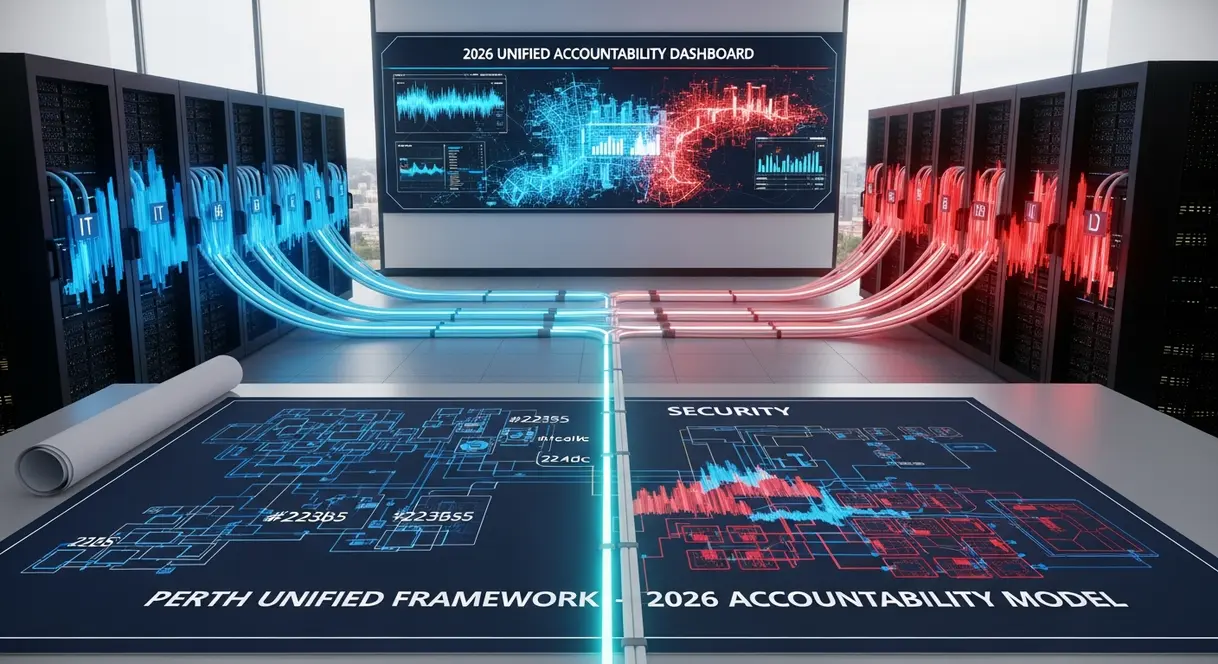
The Smart SYS Framework: Your Strategic Partner for Cloud Migration
A successful Cloud Migration doesn’t happen by accident. It’s the result of a deliberate, strategic, and holistic process. Our approach is designed to de-risk the entire project and maximise your operational return on investment.
1. Comprehensive Assessment
We start by listening. We seek to understand your commercial objectives first. Then, we conduct a deep-dive assessment of your entire ecosystem: your ICT infrastructure, telecommunication and VoIP systems, existing network cabling, and, crucially, your Commercial Security systems like Commercial CCTV and Commercial Access Control. We assess the viability of leveraging existing infrastructure and accurately map out the installation complexity for any required upgrades.
2. Customised Strategic Roadmap
Based on the assessment, we develop a customised roadmap for your Cloud Migration. This isn’t a generic template; it’s a detailed plan that outlines the phases of migration, addresses the specific risks identified, and aligns with your budget and timeline. It covers everything from data and application migration to network upgrades and electronic security system integration.
3. Unified Execution & Integration
This is where our ‘Single Point of Accountability’ shines. Our ICT and Security teams work in unison, executing the plan seamlessly. We manage network upgrades, configure the cloud environment, migrate applications, and ensure your CCTV and Access Control systems are flawlessly integrated. Our professional installers work diligently, assuring new infrastructure is implemented correctly and without damage to your property.
4. Ongoing Optimisation and Support
Your journey with us doesn’t end when the cutover is complete. We provide ongoing management and support to assure your new cloud environment remains secure, cost-effective, and optimised for performance. We provide a single, knowledgeable point of contact for all your ICT and Security needs, delivering true operational peace of mind.
Embark on Your Cloud Journey with Confidence
The move to the cloud offers immense potential for Perth’s small businesses and commercial facilities. However, realising that potential requires navigating a complex landscape of interconnected technical risks. A successful Cloud Migration is about more than just data hosting; it’s about finding a partner who understands the complete picture, from your physical cabling infrastructure to your commercial electronic security.
At Smart SYS, we provide that partnership. Our unique Dual-Engine model and commitment to being the Single Point of Accountability for both ICT and Security services assure that no detail is overlooked. We provide the strategic guidance and technical expertise to transform your migration from an operational vulnerability into a powerful catalyst for growth and resilience.
Frequently Asked Questions
How does a cloud migration impact on-site commercial CCTV and access control systems?
Migrating on-premises servers to the cloud can disrupt local network authentication paths for commercial CCTV and access control systems if they are not re-architected concurrently. A unified approach ensures door controllers and surveillance streams are isolated on secure VLANs and pointed to certified cloud endpoints without losing remote viewing or physical site security.
Why is data sovereignty critical for commercial organisations migrating to the cloud in Perth?
Hosting commercial or customer records in overseas cloud environments can breach the Privacy Act and Australian Privacy Principles. Selecting Australian-based data centres ensures operational data remains under Australian legal jurisdiction, reducing compliance liabilities and cross-border regulatory complications.
What is the Shared Responsibility Model in cloud computing?
The Shared Responsibility Model dictates that cloud providers manage the security of the host cloud infrastructure, while your business remains responsible for securing what is inside the cloud. This includes user access permissions, identity management (IAM), application data, network configurations, and ongoing threat monitoring.
Why does physical network cabling matter when migrating business operations to the cloud?
Cloud-hosted applications, VoIP telecommunications, and digital surveillance feeds depend entirely on stable local connectivity to route data off-site. Substandard cabling introduces packet loss and latency bottlenecks; certified Cat5E or Cat6 Ethernet cabling provides the baseline bandwidth needed for dependable cloud throughput.
De-Risk Your Perth Cloud Migration
Avoid costly downtime and data security pitfalls. Book a strategic assessment with our Perth-based ICT engineers to safeguard your 2026 cloud transition.
Post Comment