Construction Site Security Perth: 2026 Solar CCTV Guide
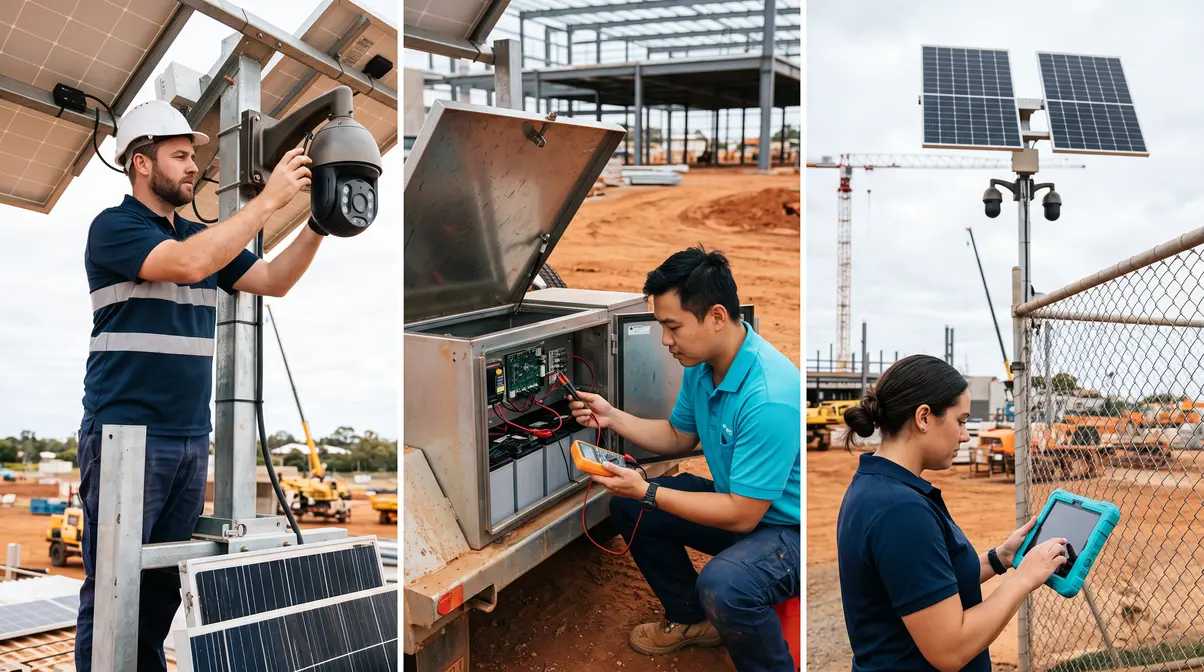
Protect your project with smart construction site security Perth solutions. Discover top solar CCTV and temporary surveillance systems built for 2026.
Table of Contents
The Evolving Landscape of Construction Site Security Perth in 2026
Civil infrastructure and commercial building projects across Western Australia are operating under intense operational schedules, complex compliance frameworks, and an ever-present risk of asset loss. When planning robust construction site security perth developers and project directors face escalating logistical pressures. Perth’s sprawling growth corridors—from the industrial expansions in Kwinana and Henderson to master-planned commercial precincts in Alkimos and Ellenbrook—present expansive, unpowered, and often isolated work zones. These environments are prime targets for organised copper theft, tool pilfering, fuel siphoning, and opportunistic vandalism.
Historically, securing a perimeter meant engaging static security guards or deploying basic, trailer-mounted diesel generators that were noisy, prone to mechanical breakdown, and environmentally inefficient. As we move through 2026, autonomous solar technology and converged electronic networks have rewritten the blueprint for site protection. At Smart SYS, we architect unified commercial security and telecommunications solutions engineered to withstand the demanding environmental extremes of Western Australia while delivering active threat deterrence.
Modern site directors and small business managers can no longer rely on unverified, fragmented systems. Mitigating loss requires a technical framework combining high-efficiency photovoltaic generation, solid-state energy storage, edge-based video analytics, and uninterrupted telecommunications. By adopting a modern design approach, commercial projects eliminate operational blind spots, safeguard valuable plant machinery, and assure continuous compliance throughout every phase of the construction lifecycle.
Why Solar CCTV Is Transforming WA Building Sites
The transition from mechanical, generator-backed security trailers to solid-state solar CCTV platforms represents a massive technological leap forward. In Western Australia, sunlight is abundant, but deploying continuous electronic surveillance under scorching summer conditions requires precise engineering. When engineering solar autonomous units for construction site security perth environments demand hardware that can withstand sustained summer heatwaves, airborne iron-ore dust, and severe coastal wind loads.
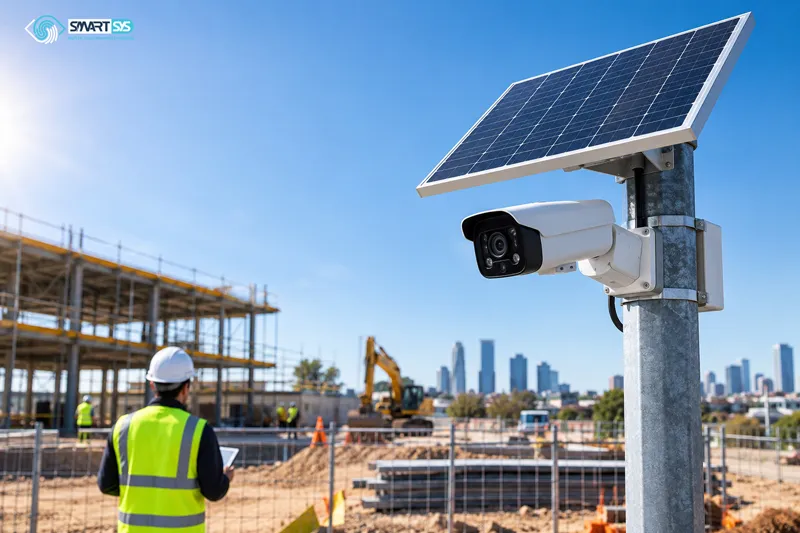
A resilient solar CCTV tower or mobile surveillance skid must operate autonomously, maintaining 24/7 recording and analytics even during prolonged periods of cloud cover or extreme winter weather. Our engineering approach incorporates oversized monocrystalline photovoltaic arrays paired with industrial-grade Lithium Iron Phosphate (LiFePO4) battery banks. Unlike older lead-acid or AGM chemistries, LiFePO4 cells tolerate deep discharge cycles and high ambient temperatures without thermal runaway or rapid capacity degradation.
Resolution and lens design are equally decisive. Rather than relying on generic consumer specifications, high-quality CCTV systems provide clear, evidentiary-grade footage that supports accurate incident verification and liability protection. When combined with intelligent analytics—such as line crossing detection, human and vehicle classification, and thermal visual sensors—these optical systems actively filter out false alarms caused by shifting shadows, windborne debris, or native wildlife. Instead of reacting to an incident after an asset has been removed, the system identifies trespassers at the outer perimeter, triggering high-output strobe lights and automated, targeted audio warnings that prompt unauthorized individuals to vacate the premises immediately.
Dual-Engine Integration: Merging ICT Infrastructure with Electronic Security
A widespread issue across commercial construction projects is the systemic friction between telecommunications contractors and electronic security installers. Traditional deployments routinely stumble over a fractured vendor model: the security company blames the network provider for video dropouts, while the IT contractor blames the camera hardware for bandwidth saturation. This disjointed execution leads to project delays, security gaps, and compounding operational costs.
At Smart SYS, we operate on a distinct Dual-Engine model, seamlessly unifying ICT Services and Security Services (CCTV, Alarms, Access Control) under a single engineering umbrella. Our role as a Single Point of Accountability eliminates the classic blame game between IT and security vendors. We design, deploy, and maintain both the transport layer and the operational hardware, ensuring every component operates with uninterrupted synergy.
To understand how this integration functions on-site, it is critical to observe proper system architecture and technical boundaries:
- CCTV and Access Control as Network Devices: Modern IP cameras, video management servers, intercoms, and digital access control units are native network devices. They depend entirely on managed switches, Virtual Local Area Networks (VLANs), Quality of Service (QoS) prioritisation, and secure IP addressing schemes to stream high-throughput telemetry without packet loss.
- Electronic Alarms as Discrete Systems: Intrusion detection panels, duress systems, and fire alarms are standalone electronic systems rather than standard network devices. While they interface with communication communicators for off-site signalling, their core operational loops rely on dedicated supervision circuits, end-of-line resistors, and discrete dry-contact relays to maintain fail-safe operational integrity under Australian building codes.
- Advanced ICT Telecommunications Infrastructure: Our ICT operations encompass robust telecommunication carrier links, industrial wireless mesh networks, VoIP site communications, unified group communication for site supervisors, real-time collaboration platforms, and physical network infrastructure. By controlling the underlying connectivity, we ensure that remote video streams, access logs, and communications channels never compete destructively for bandwidth.
Our dual-engine model is purpose-built to eliminate this operational friction, delivering construction site security perth projects require with total technical cohesion. When small business managers engage our team, they secure a partner capable of running mission-critical network infrastructure alongside perimeter defence platforms.
Perimeter Defence and Access Control Architecture
Physical perimeter demarcation marks the first line of defence on any development project. However, temporary chain-link fencing alone does little to prevent motivated intruders from entering a site. An effective security profile layers physical barriers with automated electronic access control, creating an auditable audit trail of who enters and exits the site at all times.
Controlled access points must accommodate both vehicular transport and heavy foot traffic during peak morning subcontractor arrivals. We architect turnstile pods and automated sliding cantilever or swing gates integrated with RFID card readers, biometric scanners, or smartphone Bluetooth credentials. These systems streamline morning inductions, assure that uninducted personnel cannot wander into high-risk active plant zones, and automatically account for every worker on-site in the event of an emergency evacuation.
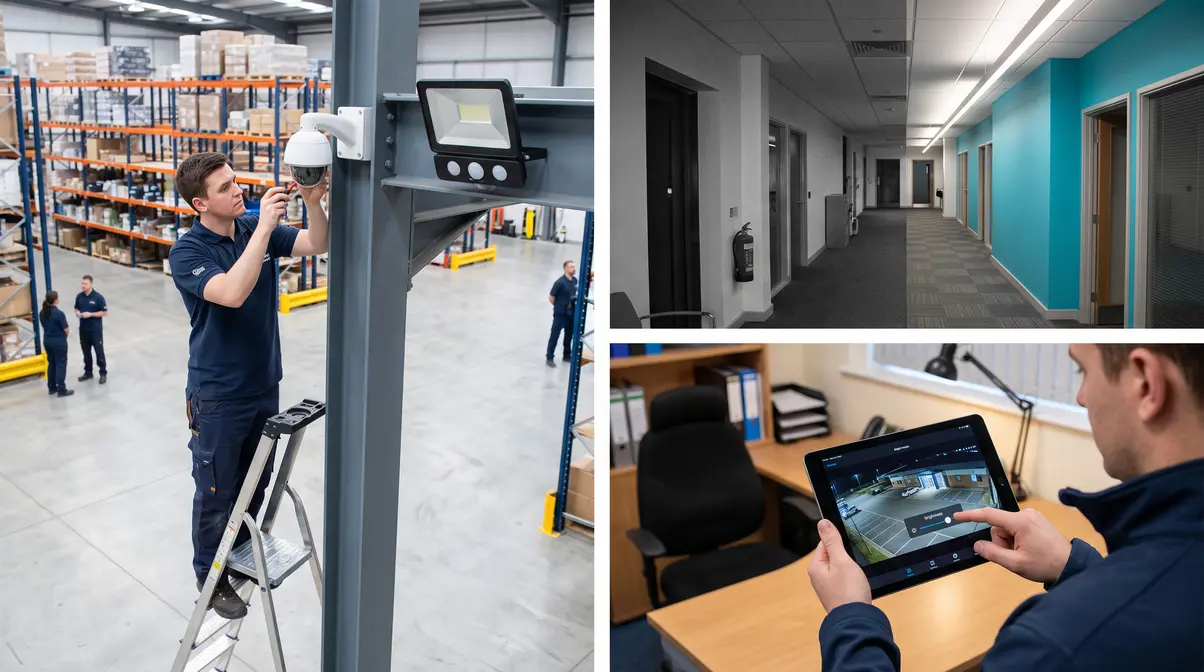
Furthermore, managing installation complexity is an essential capability. Whether integrating access units into permanent boundary walls, mounting intercoms onto temporary site offices, or running data lines across structural concrete, our licenced installers know how to avoid damages to the building fabric and site assets. If a project involves adapting existing infrastructure, our specialists conduct a rigorous structural and electrical assessment beforehand to determine whether existing conduit, cable pathways, and power supplies can safely support modern industrial hardware.
Physical Cabling and Network Standards: Avoiding Costly On-Site Pitfalls
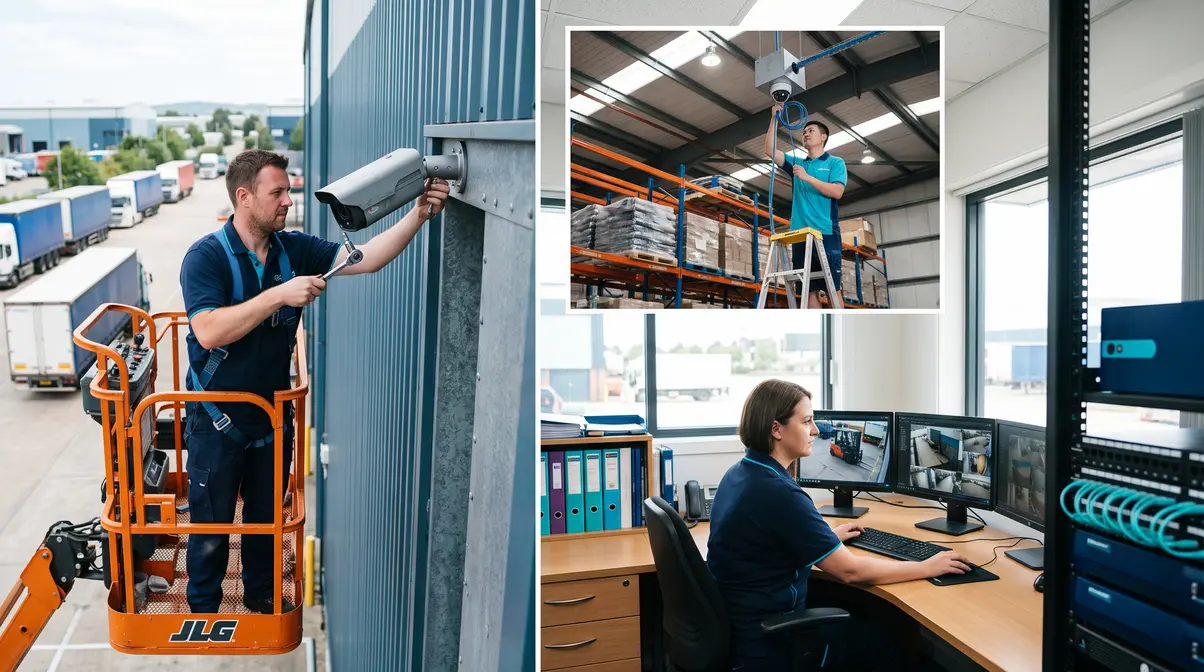
The stability of an electronic surveillance and access platform relies fundamentally on the integrity of the physical cabling. A construction site is an aggressive environment characterised by trenching, earthmoving machinery, heavy vehicle vibration, dynamic moisture levels, and intense UV radiation. Deploying substandard cabling inevitably triggers intermittent hardware drops, video corruption, and catastrophic system failures.
For hybrid or multi-structure builds where perimeter cabling links to mobile solar hubs, construction site security perth installations must rely strictly on solid copper Cat5E or Cat6 Ethernet cable. We explicitly warn site directors and contractors against the deployment of cheap, non-certified cable and poor quality connectors. Copper Clad Aluminium (CCA) cable, which frequently infiltrates low-cost security installations, possesses brittle cores that crack under normal site vibrations and suffers from severe signal attenuation over distance. Additionally, non-certified RJ45 crimp heads frequently oxidise when exposed to Perth’s humid coastal air, introducing high resistance that impairs Power over Ethernet (PoE) delivery.
Installation complexity varies significantly across project phases. Our technicians evaluate the architectural demands of every run, balancing exposed conduit on external brick surfaces against concealed cabling within wall cavities and protective underground conduits. All work must comply rigorously with statutory Australian telecommunication standards. Professional deployment mandates adherence to the Australian Communications and Media Authority (ACMA) cabling regulations, ensuring that all structured network media, grounding, and separation from mains electricity conform strictly with federal law.
Resilient Communications and Failover Protection for Remote Surveillance
Solar CCTV platforms deployed on unpowered sites rely on cellular data links (such as 4G and 5G networks) to transmit alerts, live video streams, and access credentials back to site supervisors or remote security operations centres (SOC). However, mobile network congestion, carrier tower maintenance, or line-of-sight signal degradation can compromise standard single-SIM modems, leaving a multi-million-dollar site completely blind without warning.
Effective construction site security perth relies heavily on uninterrupted remote video streams and alarm signalling. To achieve this operational standard, we implement multi-carrier routing equipment featuring automated hardware and network redundancy. Understanding the deep architectural requirements of link diversity is vital for safeguarding remote infrastructure; you can discover the technical mechanics in our detailed breakdown of failover protection for Perth security systems.
Our failover solutions dynamically swap between Tier-1 cellular carriers (such as Telstra and Optus) the instant packet loss or high latency is detected on the primary interface. For extreme outer-suburban or regional sites with limited cellular coverage, we deploy low-latency satellite links as the secondary failover path. This intelligent routing ensures that video transmission, remote health diagnostics, and alarm signals maintain continuous throughput regardless of local carrier disruptions.
Critical Vulnerabilities: Copper Theft, Vandalism, and Plant Machinery Sabotage
The risks faced by WA builders change as a structure evolves from groundworks to lock-up. Identifying these threat profiles allows for strategic deployment of electronic counter-measures:
- Civil and Earthworks Stage: At this stage, sites are vast and open, with fuel storage tanks, excavators, and uninstalled drainage piping exposed. Threats focus primarily on diesel siphoning and joyriding in heavy earthmoving machinery. Solar camera masts deployed with 360-degree detection profiles and long-range motion sensors provide wide-area perimeter monitoring across these expansive layouts.
- Structural and Framing Stage: Subcontractor traffic surges. Deliveries of structural steel, timber, and preliminary tools create opportunities for internal shrinkage and opportunistic theft. Controlled access gates and perimeter boundary monitoring prevent unrecorded vehicles from loading up equipment after hours.
- Services Rough-In Stage: This is historically the most financially devastating period for Perth builders. The installation of electrical wiring, air conditioning copper piping, and lead flashings attracts organised crime syndicates seeking high-value scrap metal. Cutting out rough-in electrical cabling can set a commercial build back by tens of thousands of dollars in delays and structural repairs. At this junction, internal battery-powered volumetric sensors and high-volume audible sounders must reinforce the external solar CCTV perimeter.
- Lock-Up to Fit-Out Stage: High-end commercial fixtures, kitchen appliances, data switches, and architectural finishes are moved on-site. Securing building entry points with electronic access control readers and deploying evidentiary-grade CCTV monitoring in loading docks assures comprehensive liability protection against trade disputes, delivery damage, and forced entry.
The primary objective of modern construction site security perth is proactive risk mitigation rather than reactive cleanup. We do not claim an impossible standard of 100% security; instead, we deploy robust systems that minimise exposure, create formidable operational deterrents, and fully adhere to Australian Consumer Law (ACCC) principles of fair and honest performance metrics.
Evaluating Commercial Costs: Total Cost of Ownership and No Unnecessary Overheads
When budgeting for commercial construction site security perth, small business managers often encounter bloated operational costs driven by static guard hire or punitive long-term equipment contracts laden with hidden maintenance fees. Static security guards, while visible, can cost upwards of $60 to $80 per hour per guard, which quickly exhausts site preliminaries budgets while still leaving expansive perimeters subject to human error and fatigue.
By comparison, deploying high-grade electronic security and autonomous solar CCTV systems delivers vastly superior coverage at a fraction of the operating expenditure. When planning capital outlay, small business managers must consider transparent base-level budgeting:
- Mobile Solar Surveillance Towers: Commercial-grade solar CCTV deployment rates typically begin starting from $350 per week for basic autonomous units, scaling upwards depending on the required mast height, thermal optical packages, and perimeter range requirements.
- Integrated Access Control Pods: Heavy-duty turnstile and automated gate setups operate on deployment schedules with basic configurations starting from $500 per month, depending on site layout and credential volume.
- Ongoing Operating Overheads: We architect our commercial systems with a focus on long-term value, assuring no or minimal ongoing monthly fees beyond essential data connectivity and optional monitoring subscriptions. By bypassing restrictive proprietary licensing models, we allow project developers to preserve cash flow while maintaining elite perimeter defence.
Investing in reliable, owned, or short-term deployed hardware with clear, modular pricing enables builders to forecast their security overhead accurately across a project’s timeline without fearing compounding surprise invoices.
Choosing the Right Partner for Construction Site Security Perth
Selecting a specialised partner for construction site security perth means looking beyond standard equipment hire yards. General equipment hire operations often treat security hardware like a piece of scaffolding or an earthmoving attachment—delivering a trailer to a site with uncalibrated cameras, default administrative passwords, and zero ongoing network support.
Smart SYS approaches every build from an integrated engineering mindset. When assessing a project, our team conducts a thorough site survey to examine terrain contours, sun exposure angles for solar arrays, blind spots, ingress routes, and cellular RF signal propagation. We assure that all our commercial installations leverage the best architectural practices, protecting physical assets while preserving the integrity of any existing infrastructure.
Our dual-engine capabilities mean we handle every layer of execution in-house. From installing the physical mast, mounting high-grade Cat5E or Cat6 Ethernet cable in robust conduit, and configuring secure carrier links, to deploying access control turnstiles and setting up VoIP site communications, we act as your unified partner. There are no competing sub-trades, no finger-pointing, and no gaps in accountability.
Checklist for Small Business Managers Deploying Site Protection
A robust framework for construction site security perth starts long before the first delivery truck crosses the perimeter. Small business managers and project directors can use this technical checklist to audit site readiness:
- Conduct a Comprehensive Solar and RF Survey: Confirm that designated mounting areas for solar trailers or skids receive unobstructed sunlight, particularly during the low sun paths of winter months. Measure local 4G/5G cellular signal strength with multiple carrier SIMs to identify dead spots.
- Enforce Certified Cabling Standards: If structured cabling is deployed between temporary site sheds, access gates, or pole-mounted units, verify that only certified Cat5E or Cat6 Ethernet cable is used. Refuse Copper Clad Aluminium (CCA) substitutes and insist on certified ACMA-registered installers.
- Define Operational Access Protocols: Establish clear entry parameters for trade contractors. Determine whether access will be tracked via physical RFID credentials, encrypted mobile passes, or temporary PINs. Ensure the access control platform logs events cleanly to support health, safety, and liability audits.
- Implement Active Visual and Auditory Deterrents: Ensure CCTV platforms do not simply record crimes passively. Validate that analytics are programmed to trigger red-and-blue strobes and audible sirens or custom voice alerts the moment a perimeter breach occurs.
- Establish Dual-Carrier Failover Routing: Safeguard communication links against network outages by implementing cellular failover hardware. High-priority alarms and evidentiary footage must reach monitoring personnel even if the primary mobile network drops out.
- Review Regulatory and Privacy Compliance: Ensure all surveillance signage is prominently displayed across perimeter boundaries in accordance with Western Australian surveillance and privacy guidelines, providing clear legal standing if footage is submitted as evidence to WA Police.
Engineered Protection Built for Western Australian Conditions
Securing a modern building project against loss, delays, and unauthorized access requires an engineering-first mindset. As timber, copper, and plant machinery costs remain volatile, leaving site security to unverified hardware or detached third parties represents an unacceptable operational risk. By integrating autonomous solar power, intelligent optical analytics, robust network backhauls, and strict access control under our unified model, we deliver complete operational defence for projects across the Perth metropolitan area and regional WA.
Smart SYS is ready to support your next project with unified ICT and commercial security systems engineered for reliability. Contact our specialist engineering team today to review your site plans, evaluate risk profiles, and design an autonomous security architecture tailored specifically to your project requirements.
Frequently Asked Questions
How do solar CCTV towers maintain power during overcast weather in Perth?
Autonomous solar CCTV towers are engineered with oversized monocrystalline solar panels paired with high-capacity Lithium Iron Phosphate (LiFePO4) battery storage. This configuration provides several days of battery autonomy, allowing high-definition recording, edge video analytics, and cellular modems to run uninterrupted through extended overcast or winter conditions without generator backup.
Why should Copper Clad Aluminium (CCA) cabling be avoided on construction sites?
CCA cable uses a brittle aluminium core that easily fractures under site vibrations, ground movement, and machinery operations. Furthermore, aluminium has higher electrical resistance than pure copper, leading to signal loss and unreliable Power over Ethernet (PoE) delivery to cameras. Australian ACMA regulations mandate compliant, solid copper Cat5E or Cat6 cabling for reliable site networks.
What is cellular failover and why is it critical for construction site CCTV?
Cellular failover uses dual-SIM industrial routers configured with multiple Tier-1 mobile carriers. If the primary network encounters tower maintenance, congestion, or signal loss, the system automatically redirects telemetry, live video streams, and alarm events to the secondary carrier in seconds, ensuring the perimeter surveillance system never goes offline.
How does unified ICT and security integration benefit site managers?
Modern IP cameras and access control units function as native network devices. Merging ICT and electronic security under a single provider eliminates disputes between IT vendors and security installers over bandwidth and video dropouts. It ensures proper VLAN segmentation, Quality of Service (QoS) prioritisation, and seamless carrier routing with a single point of accountability.
Secure Your Perth Construction Site with Solar CCTV
Prevent costly theft, vandalism, and project delays. Speak to our Perth security experts today for reliable, rapid-deployment solar CCTV and site monitoring systems tailored to your project.
Post Comment