Accountability Guide: Combining IT & Security in Perth (2026)

Eliminate business risk. Learn why combining IT & Security in Perth creates a single, trusted point of accountability for your entire organisation.
Table of Contents
The Evolution of IT & Security in Perth for Modern Commercial Enterprises
In modern enterprise environments, the intersection between information technology and physical premises protection has shifted from an experimental concept into an operational requirement. For small business managers navigating operational expansion across Western Australia, the traditional separation between data networks and electronic security hardware is no longer viable. Historically, an enterprise would contract an IT provider to commission local network infrastructure and unified telecommunications, while simultaneously engaging a separate security contractor to wire commercial alarms, surveillance cameras, and perimeter controls. This bifurcated approach inevitably created systemic vulnerabilities, communication breakdowns, and unmanageable operational friction.
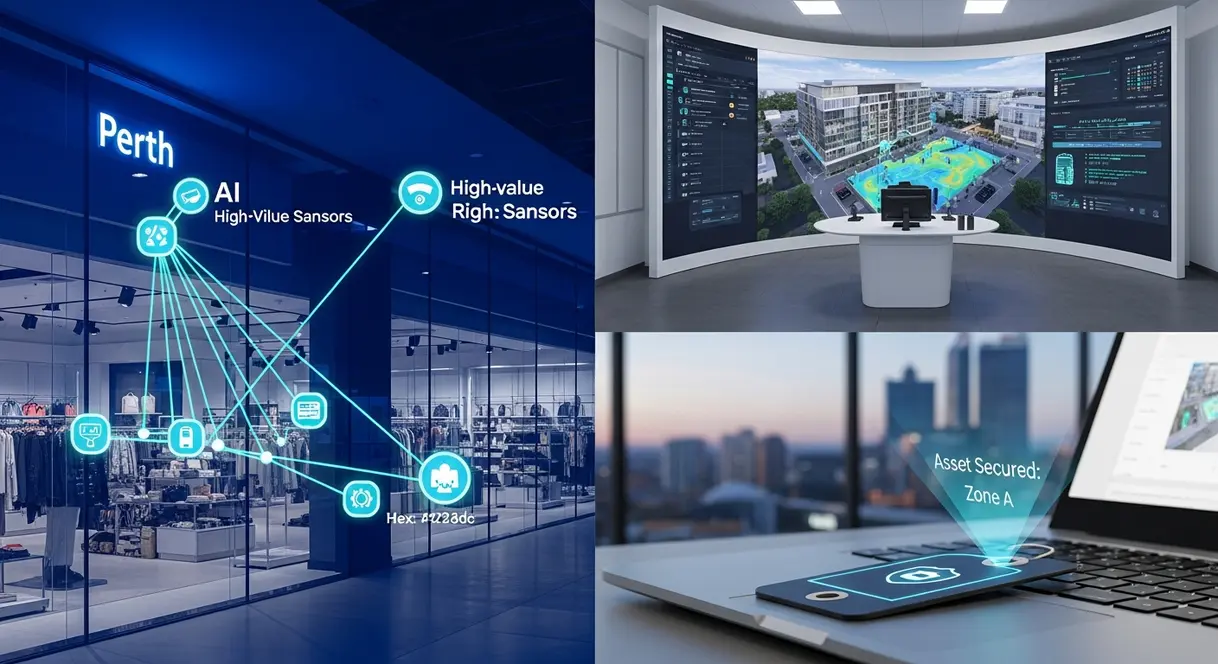
When managing IT & Security in Perth, businesses often encounter the immediate complications of disparate technologies attempting to occupy the same physical and logical footprint. Commercial facilities require seamless alignment across high-throughput data backbones, mission-critical voice channels, and electronic physical safety measures. At Smart SYS, we architect environments where ICT systems—such as telecommunication, VoIP, unified group communication, real-time collaboration, and network infrastructure—work in complete synchronicity with dedicated physical security measures, including fire alarms, duress alarms, commercial access control, and commercial CCTV systems.
To understand the depth of this structural integration, small business managers can explore how we Unify IT & Security in Perth: The 2026 Accountability Model to eliminate vendor friction and protect operational uptime. Establishing a truly resilient operational environment requires moving past the antiquated model of multi-vendor management and embracing engineered, unified accountability.
The Contractor Blame Game: Why Siloed ICT and Physical Security Fail
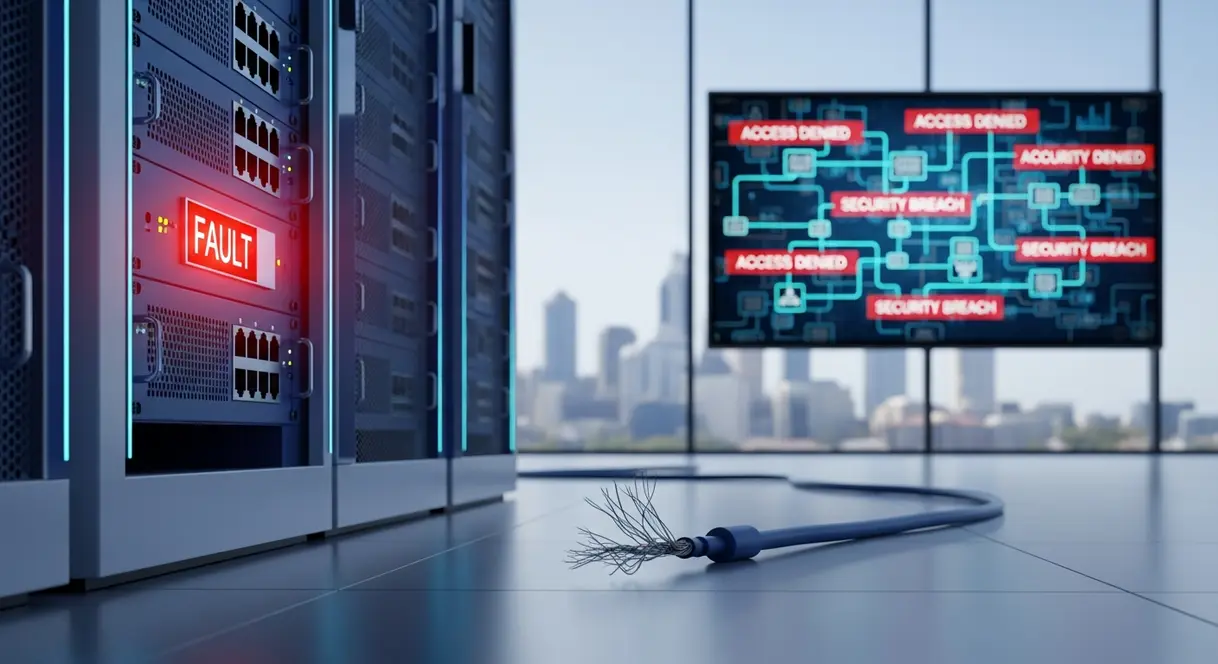
The primary point of operational failure in standard commercial facilities does not originate from hardware malfunctions; it stems from organizational fragmentation. When separate vendors manage physical security hardware and computer networking, any system anomaly triggers an immediate blame game. We regularly observe scenarios where an access control controller loses connectivity, or surveillance footage drops frames during critical hours. When small business managers report the issue, the security contractor asserts that the corporate local area network (LAN) is dropping packets, while the IT contractor insists that the security contractor’s hardware is misconfigured or flooding the switch ports.
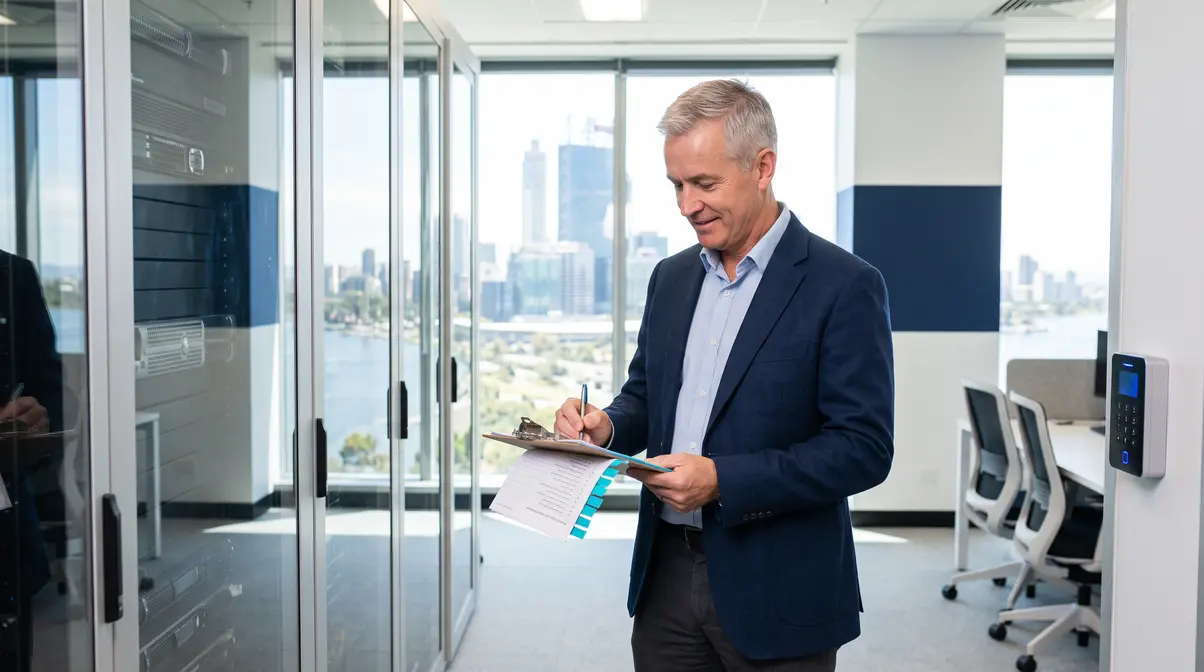
Fragmented deployments of IT & Security in Perth lead to operational deadlocks that expose facilities to unacceptable risk profiles. The fundamental reality of modern installations is that electronic systems share physical conduits, power delivery mechanisms, and data transport layers. Consider the typical pain points generated by split-contractor deployments:
- Bandwidth Contention and Video Loss: Security technicians install multi-sensor digital surveillance cameras onto unmanaged switches without coordinating VLAN tagging or Quality of Service (QoS) queues with the IT team, causing VoIP call degradation and network congestion.
- Port Misconfigurations and Security Gaps: Access control panels are connected to standard access ports without 802.1X authentication or proper network segregation, exposing the wider commercial network to physical port tampering.
- Finger-Pointing During Incident Investigations: When a security incident occurs and data fails to log, neither provider takes ownership of the failure, leaving commercial management to absorb the operational and financial fallout.
- Uncoordinated Power Allocations: Power over Ethernet (PoE) budgets on edge switches are exceeded because physical security contractors deploy active Pan-Tilt-Zoom (PTZ) units without calculating the thermal and wattage limitations managed by the IT contractor.
The Smart SYS Dual-Engine Architecture: Single Point of Accountability
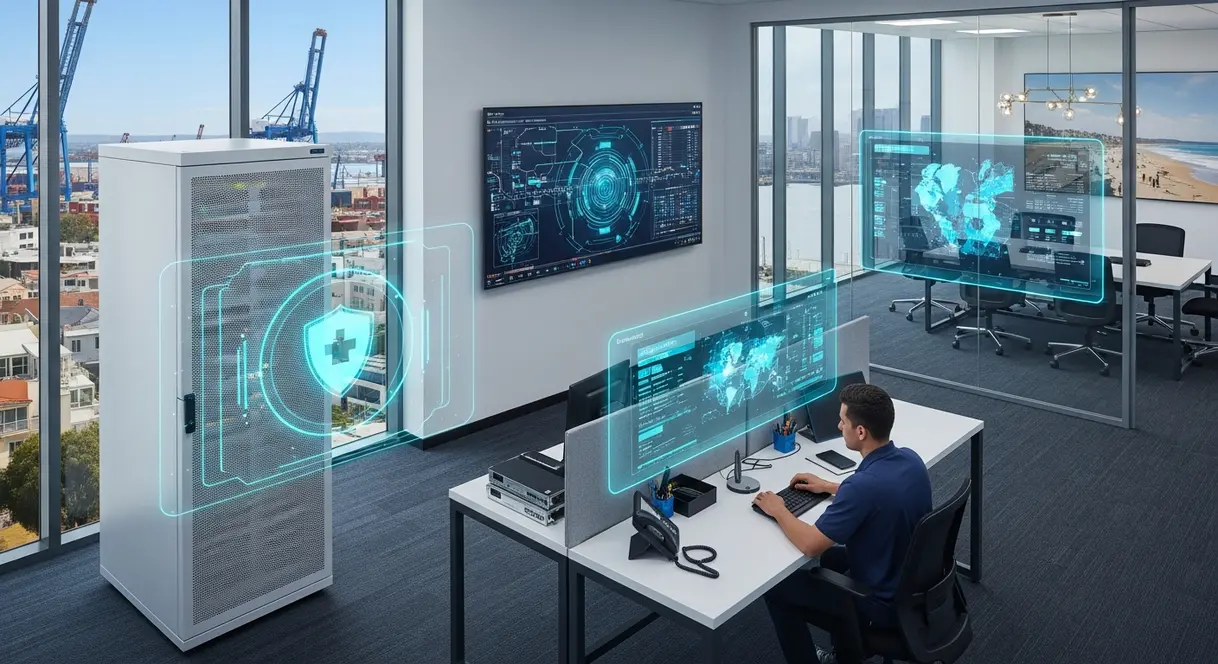
To permanently resolve the contractor blame game, we operate on a proprietary Dual-Engine model. We provide comprehensive ICT Services—spanning telecommunication, VoIP, unified group communication, real-time collaboration, and structured network infrastructure—directly aligned with our specialized Security Services (CCTV, Alarms, Access Control), fire alarms, and duress alarms. This framework establishes Smart SYS as the definitive Single Point of Accountability.
| Operational Pillar | Core Systems Managed | Network Classification |
|---|---|---|
| ICT Engine | Telecommunication, VoIP, Unified Group Communication, Real-Time Collaboration, Core Routing & Switching | Data Backbone & Transport Layer |
| Physical Security Engine | Commercial CCTV, Commercial Access Control | Authenticated Network Devices |
| Life Safety & Alarm Engine | Intruder Alarms, Commercial Fire Alarms, Duress Alarms | Dedicated Supervised Signaling (Non-Network Devices) |
Our dual-engine framework for IT & Security in Perth eliminates supplier friction by ensuring that network architects and physical security engineers work within the same operational parameters. It is crucial to maintain strict technical clarity regarding device categories: while commercial CCTV cameras and commercial access control panels function directly as network devices communicating over managed protocols, commercial alarm systems, fire alarms, and duress alarms are dedicated, supervised signaling systems engineered for life safety and fail-safe operation. Treating alarms strictly through their compliant signalling standards rather than mischaracterizing them as standard network hardware ensures maximum physical reliability and strict adherence to Australian installation standards.
Physical Infrastructure Standards: Cabling, Conduits, and Building Integrity
The foundation of any converged enterprise installation lies within the physical layer. Converging physical infrastructure with IT & Security in Perth requires robust cabling, engineered containment, and absolute structural precision. The longevity and reliability of commercial VoIP, data transport, and evidentiary-grade surveillance systems depend entirely on the quality of the transmission media.
Transmission Media: Eliminating Physical Layer Bottlenecks
Every commercial deployment we design utilizes certified Cat5E or Cat6 Ethernet cable rated to handle high-frequency data transmission and high-wattage PoE delivery without packet degradation or excessive heat generation. We strictly warn small business managers against cheap, non-certified cable and poor quality connectors. Low-grade cables—such as Copper-Clad Aluminum (CCA)—often suffer from high attenuation, conductor brittleness, and severe resistance imbalances. Over time, these cheap alternatives lead to PoE voltage drops, intermittent video stream disconnects, and packet corruption on critical unified group communication channels.
Building Preservation and Architectural Assessment
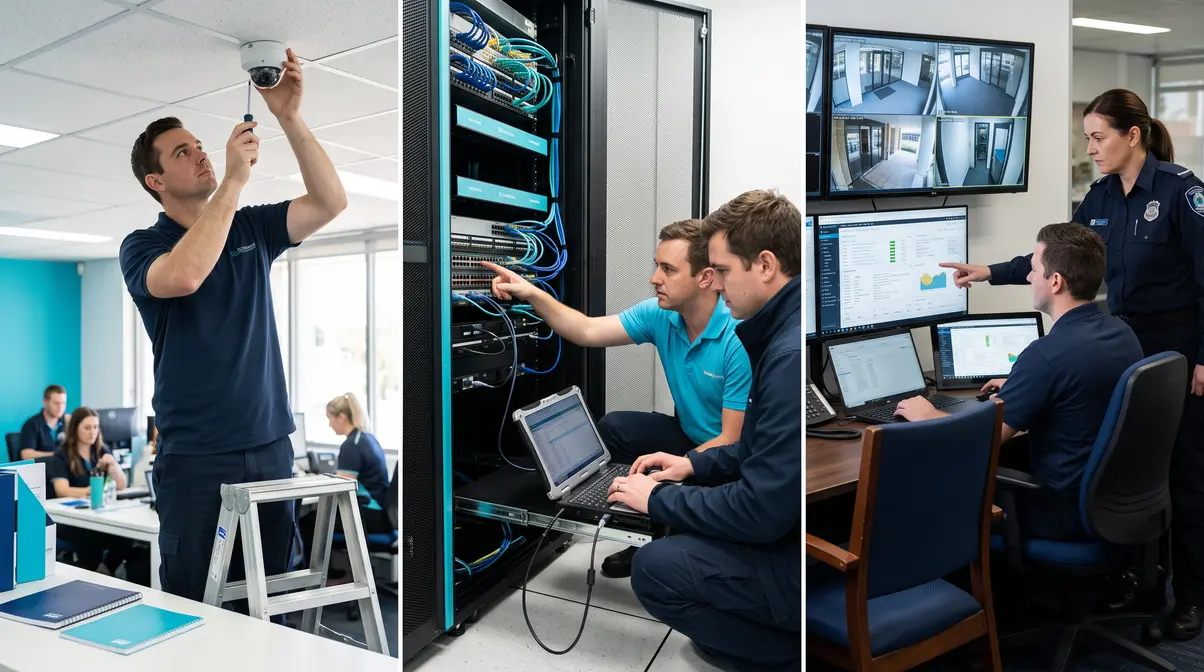
Deploying structured cabling across commercial properties requires deep architectural understanding. Our licenced professionals know how to avoid damages to the building while maintaining aesthetic, acoustic, and structural integrity. Leveraging existing infrastructure requires careful assessment before any new system design is finalized. We inspect risers, cable trays, building penetrations, and ceiling spaces to determine whether legacy pathways can be safely reused or if new containment is mandatory.
Field-tested practices for installing IT & Security in Perth ensure building integrity across varied architectural environments. The installation complexity varies significantly based on structural makeup:
- Cavity Wall Deployments: Concealed cabling within hollow stud walls and drop ceilings requires specialised feeder rods, fire-rated pathway protection, and acoustic sealants to preserve the building’s thermal and fire separation boundaries.
- Solid Masonry and Heritage Structures: Exposed conduit on external brick or pre-cast concrete demands high-impact, UV-stabilized conduits, precision masonry fixings, and custom-routed entry points designed to prevent moisture ingress and avoid physical damage to historical or structural surfaces.
- Industrial and Warehouse Environments: Suspended catenary systems, metal trunking, and heavy-duty galvanized conduit runs are implemented to shield data lines from mechanical damage, electrical interference (EMI), and environmental exposure.

Evidentiary Footage and Commercial Access Control: Active Defence Strategies
Deploying commercial access control alongside integrated IT & Security in Perth allows commercial managers to establish strict physical identity governance. Modern access control panels operate as authenticated network devices residing within dedicated, encrypted subnets. They communicate directly with credential management servers to grant, log, or restrict entry in real time, supporting role-based permissions across office suites, server rooms, and warehouse storage.
Simultaneously, visual verification must be dependable. Rather than relying on non-standard marketing terms, we engineer surveillance solutions on proven optical foundations: High-quality CCTV systems provide clear, evidentiary-grade footage that supports accurate incident verification and liability protection. When an access event or security trip occurs, commercial systems must deliver forensic-level detail—capturing identifiable facial characteristics, vehicle registration data, and micro-movements—under complex lighting conditions.
To align with guidance from the Australian Cyber Security Centre (ACSC), our commercial network architectures implement defense-in-depth methodologies. Physical access control hardware, network surveillance streams, and critical server assets are segmented into distinct operational zones, ensuring that physical access points cannot be leveraged as attack vectors into corporate ICT assets.
Telecommunication and Real-Time Collaboration Integration
A resilient enterprise cannot operate with disjointed communications. Delivering resilient telecommunications and IT & Security in Perth requires treating voice channels, unified messaging, and emergency notification frameworks as a synchronized system. Our ICT services provide high-availability VoIP platforms, unified group communication, and real-time collaboration environments that keep internal teams, site managers, and executive leadership connected at all times.
By managing both the switching infrastructure and the telecommunication pipelines, we eliminate common transmission issues such as jitter, high latency, and voice packet dropouts. We deploy granular VLAN tagging and strict QoS policies that prioritize real-time audio and emergency duress signals above standard office internet traffic. If a fire alarm triggers or a duress alarm is pressed in a customer-facing zone, our unified systems can automatically initiate high-priority alerts across the entire unified group communication network, transmit visual feeds to response personnel, and dynamically initiate emergency communication protocols.
Cost Transparency, Risk Mitigation, and Commercial Value
Small business managers frequently struggle with complex, ongoing recurring fees imposed by traditional multi-vendor security and IT contracts. At Smart SYS, our philosophy centers on operational transparency, robust risk mitigation, and strict Australian Consumer Law (ACCC) compliance. We believe in providing robust commercial systems with no or minimal ongoing monthly fees, ensuring that our commercial clients own and control their on-premise and hybrid infrastructure without arbitrary software-lockout fees.
To provide realistic budgetary clarity, our bespoke commercial engineering services feature clear baseline capital investments:
- Structured Network Infrastructure & ICT Commissioning: Starting from $1,200 for base commercial switching, routing, and telecommunication configuration.
- Commercial CCTV Deployments: Starting from $1,800 for high-reliability network video recording systems paired with high-quality, evidentiary-grade cameras.
- Commercial Access Control Systems: Starting from $2,200 for multi-door controller hardware, secure door furniture, and credential management setups.
- Life Safety, Duress & Alarm Systems: From $1,100 for supervised, multi-zone commercial alarm panels and precision duress endpoints.
We do not make misleading claims of 100% security or complete risk immunity, as any technical system operating in the real world must account for environmental, human, and physical variables. Instead, we assure small business managers that our engineered solutions maximize risk mitigation, maintain industry-standard physical security hardening, and provide absolute system accountability when unexpected incidents occur.
Strategic Roadmap: Auditing and Deploying Unified IT & Security in Perth
Evaluating the capital investment of IT & Security in Perth without ongoing vendor lock-in begins with a systematic operational audit. For organizations seeking to streamline their infrastructure and eliminate the contractor blame game, we follow a rigorous, five-phase deployment model:
- Comprehensive Infrastructure Audit: We assess all existing structured cabling, Cat5E or Cat6 Ethernet cable pathways, switch capacity, PoE limits, telecommunication trunks, and physical security endpoints. We evaluate legacy materials to determine whether existing infrastructure can be safely utilized or requires modernization.
- Architectural Pathway & Containment Design: Our engineers map out precision routing across wall cavities, external brickwork, and suspended ceiling grids. We establish installation parameters to avoid damages to the building while ensuring full structural and fire-rating compliance.
- Logical Network Segmentation & QoS Engineering: We configure core switches with isolated VLANs for commercial CCTV, commercial access control, VoIP, real-time collaboration, and corporate data traffic, applying strict access control lists (ACLs) to eliminate lateral movement.
- Hardware Deployment & Hardening: We install commercial-grade access control, high-quality evidentiary CCTV, life-safety fire alarms, and dedicated duress alarms. Alarm panels are deployed as dedicated, supervised signaling systems, while CCTV and access controllers are hardened as authenticated network devices.
- Commissioning, Verification, and Handover: We conduct end-to-end stress tests, validating packet delivery, VoIP clarity, camera field-of-view, recording frame rates, duress trigger times, and access fail-safes. Small business managers receive comprehensive administrative access with no unnecessary ongoing subscription lock-ins.
By choosing the right unified partner for IT & Security in Perth, commercial enterprises secure a durable operational foundation, fully supported by a Single Point of Accountability. At Smart SYS, we bridge the gap between ICT engineering and commercial physical safety, empowering Western Australian businesses with scalable, resilient, and fully integrated infrastructure designed for the demands of 2026 and beyond.
Frequently Asked Questions
Why is combining IT and physical security under a single provider advantageous for Perth businesses?
Unifying IT and physical security under a single point of accountability eliminates the common contractor blame game between network and security technicians. It ensures that bandwidth-heavy hardware like CCTV, access control, VoIP, and corporate data are engineered together on coordinated networks with proper VLAN segmentation, Quality of Service (QoS), and PoE power management, reducing downtime and system conflicts.
Are commercial alarms treated the same as network-connected CCTV and access control?
No. While commercial CCTV cameras and access control panels operate as authenticated network devices communicating over managed IP protocols, commercial intruder, fire, and duress alarms function as dedicated, supervised signalling systems. Maintaining this architectural distinction ensures full compliance with Australian life-safety standards and fail-safe reliability.
What cabling standards are required for integrated commercial IT and security systems?
Commercial deployments require certified Cat5E or Cat6 solid copper Ethernet cabling engineered for high-frequency transmission and high-wattage PoE delivery. Substandard cabling, such as Copper-Clad Aluminium (CCA), should be strictly avoided due to conductor brittleness, PoE voltage drops, and packet degradation across critical communication and surveillance channels.
Do integrated IT and security systems require locked-in monthly subscription fees?
Commercial systems should be engineered with no or minimal recurring monthly fees wherever practical, allowing organisations to own and control their on-premise and hybrid infrastructure outright. Transparent deployments focus on upfront capital expenditure for hardware, cabling, and configuration without arbitrary recurring software-lockout charges.
Streamline Your IT & Security Under One Accountable Partner
Stop juggling disconnected vendors. Unify your Perth operations with fully integrated managed IT support, robust network infrastructure, and physical security management all handled under one roof.
Post Comment